Great Wall vs Everest Glass Partition: Which Modular Wall System Fits Your Office?

Great Wall vs Everest — both are MS Office Systems flagship modular partition systems, both demountable, both compatible with the same doors. So which one should you specify for your office fit-out? This Great Wall vs Everest comparison covers frame design, acoustic performance, finish range, installation method, system cost, and real project use cases — so you can decide before sending the RFP.
Great Wall: Visible-Frame Modular, Since 2016
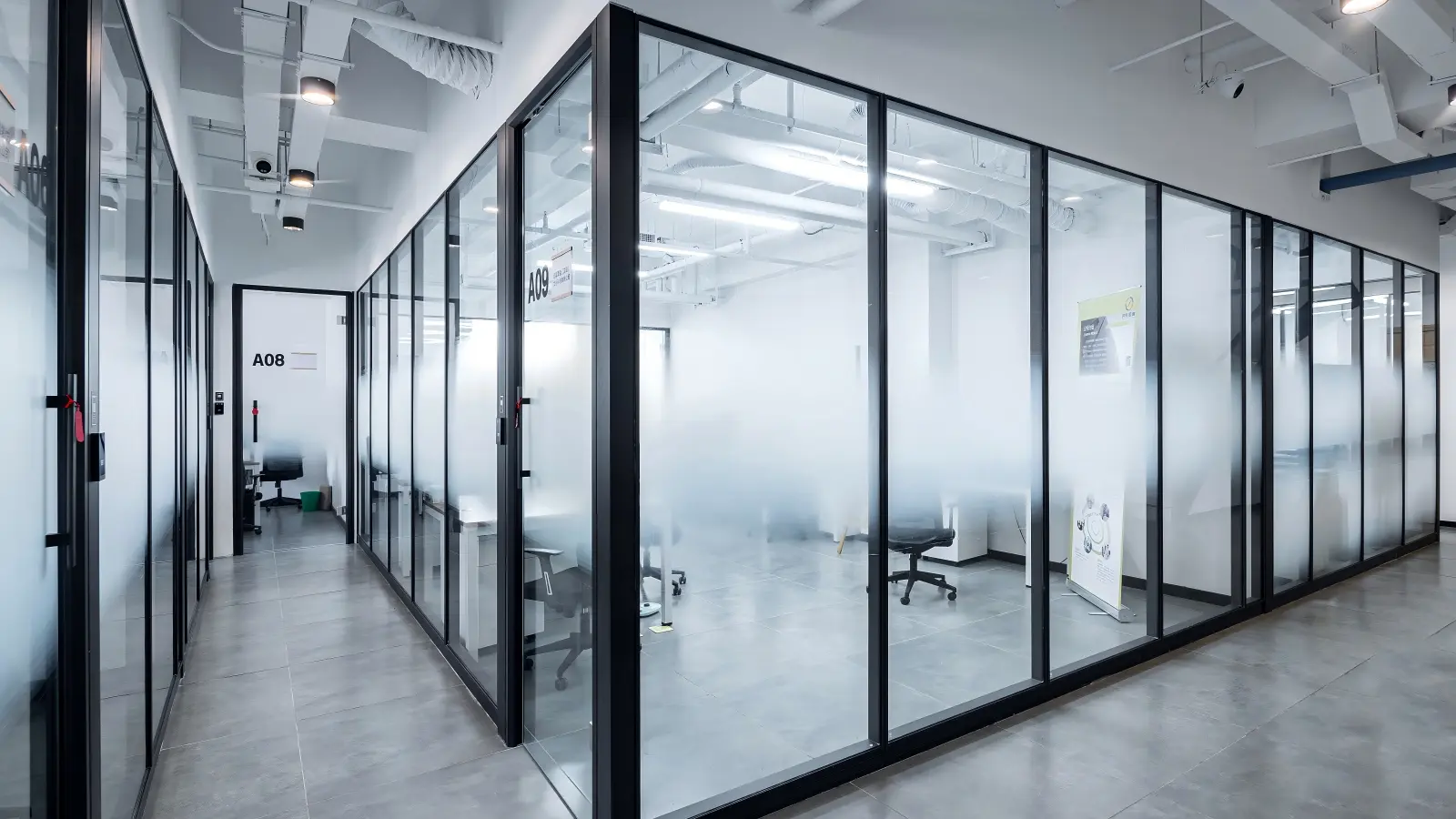
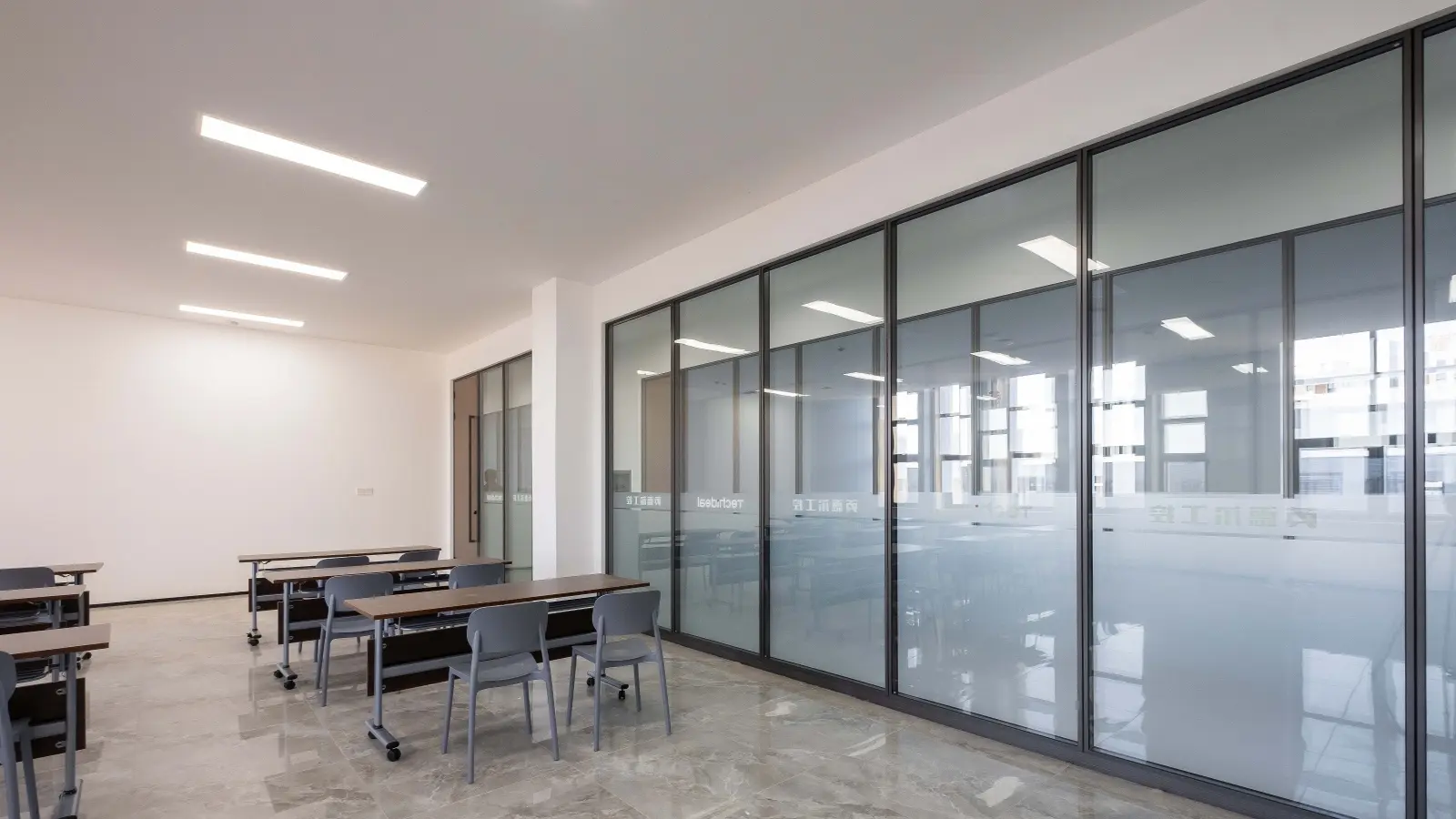
Great Wall was MS Office Systems’ first modular partition system, launched in 2016 as China’s first unit-based prefabricated partition wall. The engineering choice that defines the series is the EPDM rubber-strip snap connection: glass panels lock into the visible aluminum frame with a rubber gasket compression seal, which is fast to install, dust-free on site, and trivial to demount when the office reconfigures. In Great Wall vs Everest terms, this one connection method is what every other difference follows from.
Because the frame is visible, Great Wall delivers an unapologetically modular, industrial aesthetic — the partition wall reads as a partition wall, not a wall trying to be invisible. That’s a feature, not a bug, for projects where the modular vocabulary is part of the design intent (coworking, tech offices, factory administrative spaces, educational fit-outs).
What makes Great Wall distinct
- Broadest glass thickness range: 5 / 6 / 8 / 10 / 11 / 12mm tempered — covers everything from budget single-glazed to top-spec acoustic configurations
- Snap-fit EPDM connection: 1–2 minute panel install (vs glue-cure for hidden-frame systems), no skilled adhesive labour required
- Acoustic range: 30dB single-glazed baseline; up to 45dB with the double glass configuration
- Cost-effective: typically 20–35% lower system cost than Everest at the same square-meter coverage — material and labour both
- Hardware-friendly: visible frame profile makes lock, hinge, and electronic access mounting more straightforward for retrofits
The two sub-configurations are Great Wall single glass (cost-effective base) and Great Wall double glass (acoustic upgrade with 47mm air cavity, optional built-in venetian louvers).
Everest: Hidden-Frame Premium, Since 2017
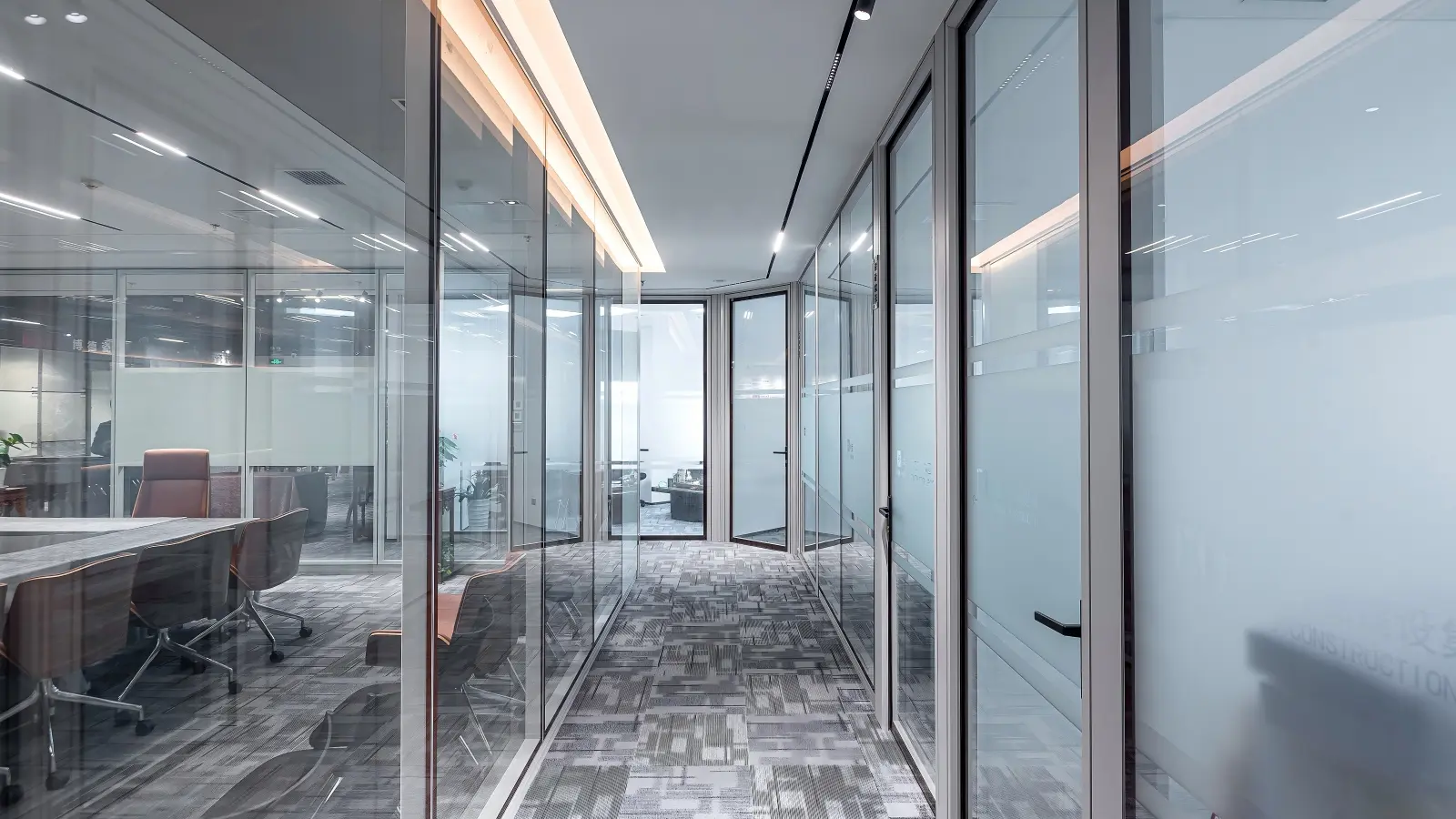
Launched in 2017, Everest answered a market question Great Wall couldn’t: how do you deliver modular demountability and curtain-wall aesthetic at the same time? The engineering answer was to replace the EPDM gasket with 3M VHB structural acrylic adhesive, bonding glass directly to a recessed aluminum sub-frame so the frame profile disappears from view.
The result: a partition that looks like architectural curtain wall — uninterrupted glass plane, no visible mullions, no shadow lines — while keeping every advantage of a modular system. Demountable. Reconfigurable. Cable-channel integrated. Door-compatible. That is the other half of the Great Wall vs Everest picture.
What makes Everest distinct
- Hidden frame aesthetic: 3M structural bonding eliminates the visible mullion between panels — the glass reads as a continuous plane
- Up to 45dB acoustic with double-glazed: the Everest double glass configuration with 64mm air cavity delivers boardroom-grade acoustic privacy
- Compatible with specialty infills: Paint Glass (back-painted custom RAL colors) and Smart Glass (PDLC switchable privacy) mount directly into Everest framing
- Premium aesthetic positioning: the standard for executive offices, boardrooms, premium reception lobbies, and architecturally-driven specifications
- Specifier-friendly: hidden-frame appearance matches the language of independent architectural curtain-wall systems, which simplifies design integration with adjacent envelope systems
The two sub-configurations are Everest single glass (the purest hidden-frame minimalist option) and Everest double glass (the 45dB acoustic premium with optional integrated louvers).
Great Wall vs Everest Spec Table, Side by Side
The Great Wall vs Everest specification table below distills everything covered above into a single reference. Use it during shop-drawing review or when comparing two-supplier RFPs. Every row where the two systems differ is a Great Wall vs Everest decision point; every row where they match is one less thing to argue about.
| Specification | Great Wall | Everest |
|---|---|---|
| Launch year | 2016 | 2017 |
| Frame visibility | Visible aluminum profile | Hidden (3M bonded) |
| Glass-to-frame connection | EPDM rubber-strip snap | 3M VHB structural adhesive |
| Wall thickness | 74mm | 74mm |
| Glass options | 5 / 6 / 8 / 10 / 11 / 12mm tempered | 5 / 6 / 8mm tempered |
| Acoustic (single-glazed) | 30dB | 30dB |
| Acoustic (double-glazed) | Up to 45dB (47mm cavity) | Up to 45dB (64mm cavity) |
| Max panel height | 3,600mm | 3,600mm |
| Max panel width | 1,600mm | 1,600mm |
| Frame finish | RAL 7047 / 7016 / Fluoropolymer Gray, custom RAL | RAL 7047 / 7016 / Fluoropolymer Gray, custom RAL |
| Specialty infill compatibility | Paint Glass, Smart Glass (limited) | Paint Glass, Smart Glass (full) |
| Built-in louvers (double-glazed) | Optional, knob or motorized | Optional, knob or motorized |
| Material reuse rate | 95% | 95% |
| Demountable | Yes | Yes |
| Standard compliance | GB/T 23451-2009 | GB/T 23451-2009 |
| Lead time | 25–30 days (18–20 expedited) | 25–30 days (18–20 expedited) |
| Relative system cost | Baseline | +20–35% vs Great Wall |
| Best suited for | General office, coworking, industrial admin, education, healthcare back-office | Executive offices, boardrooms, premium reception, hospitality, premium retail |
How to Decide: Great Wall vs Everest for Your Project
Three questions usually settle the Great Wall vs Everest decision in the first design meeting — and once you answer them, the specification almost picks itself:
1. What does the design intent call for?
Design intent is the first Great Wall vs Everest filter. If the partition wall is part of the architectural vocabulary — visible, modular, industrial — specify Great Wall. If the design intent is “the glass should feel architectural, not industrial” — specify Everest. Look at the adjacent envelope: if the building already has curtain wall systems, Everest matches their visual language; if the surrounding architecture is exposed structure or modular ceiling, Great Wall is harmonious.
2. What acoustic spec does the brief require?
The second Great Wall vs Everest filter is acoustic spec. Both series hit 30dB single-glazed and 45dB double-glazed, so acoustic peak performance is identical. The question is which configuration is specified. Open-plan offices, general meeting rooms, and standard private offices typically only need 30dB — single-glazed in either series is fine. Boardrooms with frequent video calls, finance back-offices, executive HQ suites, and healthcare consultation rooms typically specify 40–45dB, which means double-glazed (either series works).
3. What’s the budget per square meter?
Budget is the third Great Wall vs Everest filter. If budget is the deciding factor, Great Wall typically delivers 20–35% lower system cost at equivalent square meter coverage. That cost difference compounds across a full floor plate. If budget is not the deciding factor and design specification owns the call, Everest’s hidden-frame aesthetic earns its premium in executive-tier spaces.
Common pattern: a single building often specifies both — Great Wall on general office floors and Everest on the executive floor or boardroom suite. Because both share the same framing dimensions, door interfaces, and cable channels, mixing them within a project is engineering-trivial — the Great Wall vs Everest question gets answered floor by floor rather than once.
Great Wall vs Everest in Real Projects
The Great Wall vs Everest choice plays out differently across sectors. Two recent installations show what each system looks like in practice:
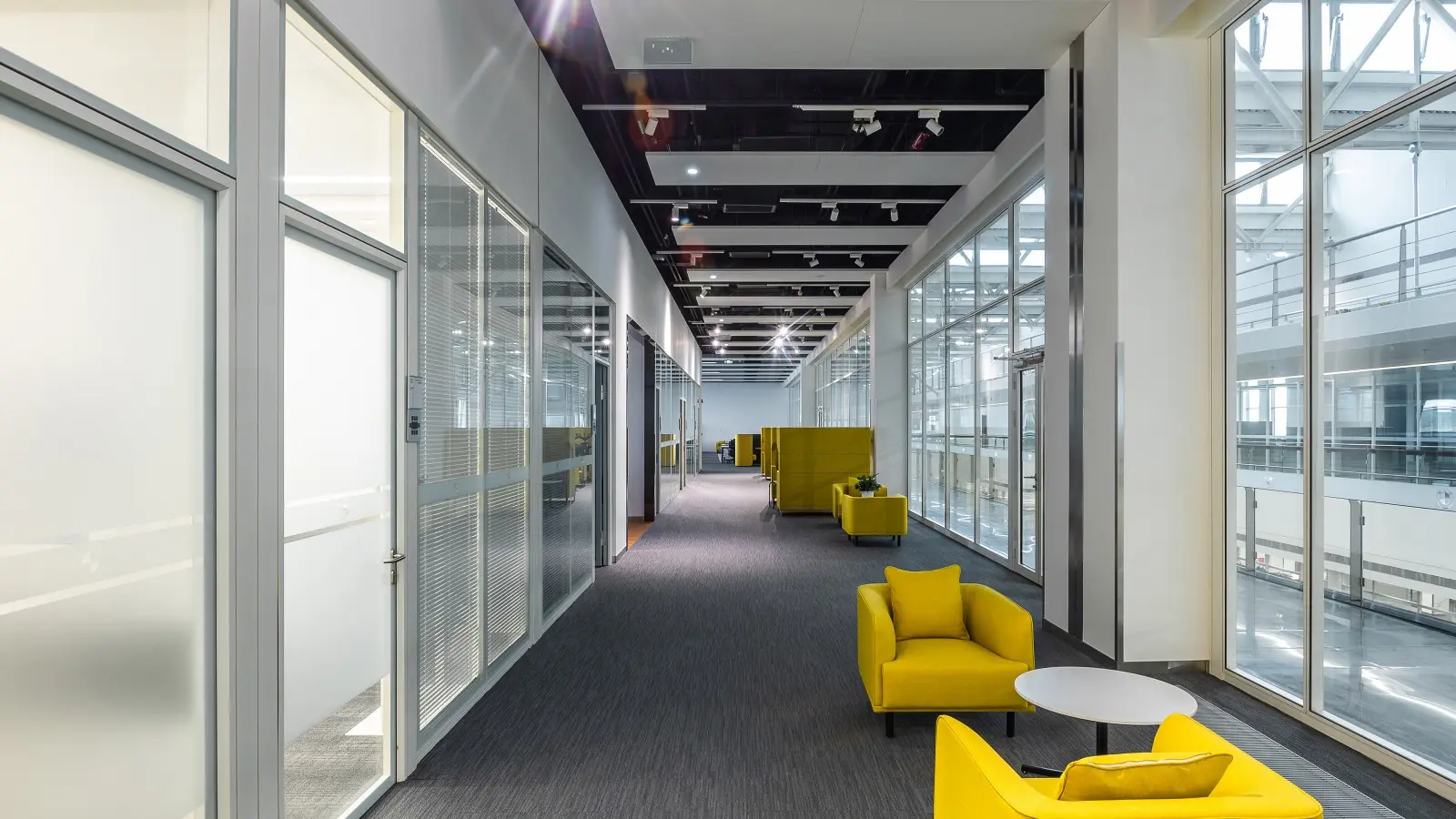
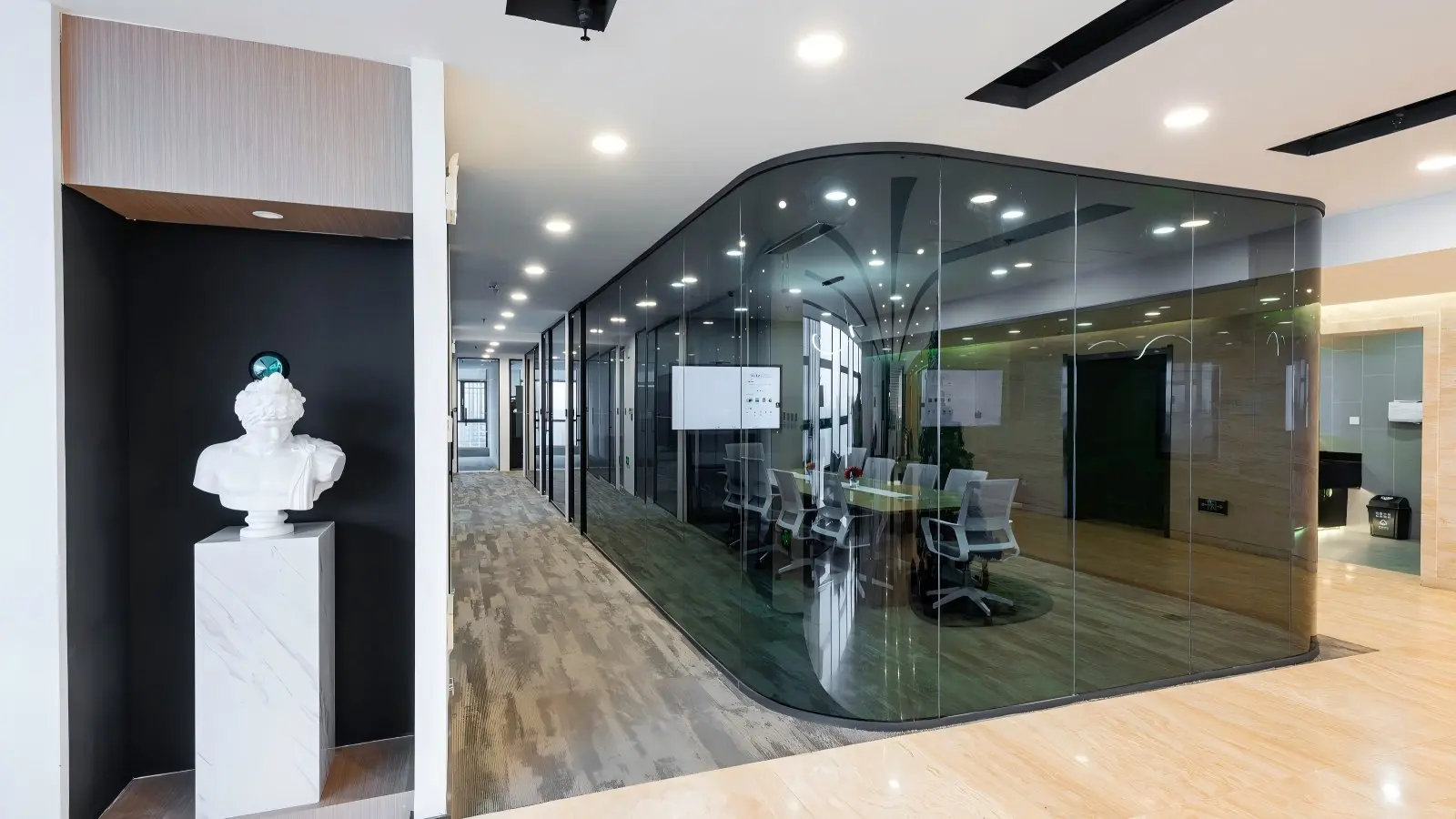
More Great Wall vs Everest project deep-dives are catalogued on our project case studies page — 13 references covering coworking, banking, healthcare, automotive, education, and government sectors.
Frequently Asked Questions
Can I mix Great Wall and Everest in the same project?
Yes — and many projects do exactly this. Both series share the same 74mm wall thickness, floor and ceiling track interfaces, door hardware, and cable channels. A typical pattern is Great Wall on general office floors and Everest on the executive floor or boardroom suite. The visual transition at the floor break is clean because the framing dimensions match, which is why mixing is the most common answer to Great Wall vs Everest in multi-floor projects.
Does Everest cost significantly more than Great Wall?
Typically 20–35% more at equivalent square meter coverage, depending on glass thickness specified, finish customization, and total project size. The premium covers the 3M structural adhesive bonding process, hidden-frame sub-extrusion, and additional curing time in fabrication. For executive-tier spaces and architecturally-driven specifications, the cost difference is usually justified by the aesthetic difference — that premium is the core of the Great Wall vs Everest budget question.
Which series gives better acoustic performance?
Peak acoustic performance is equivalent — both reach 30dB single-glazed and 45dB double-glazed. What matters is which configuration you specify. The decision is independent of Great Wall vs Everest. For boardroom or banking acoustic privacy, specify double-glazed in either series; for general office privacy, single-glazed is sufficient.
Can both systems be demounted and reinstalled?
Yes. Both series are engineered for full demountability with a 95% material reuse rate. Glass, frame, and hardware all unclip / unbond cleanly and reinstall in a new layout with replacement gasket or adhesive strip. This is one reason both series are specified for offices with 3–5 year reconfiguration cycles — the partition becomes a long-term asset, not a sunk cost.
Can I add Smart Glass or Paint Glass after installation?
Yes for both, with retrofitting easier on Everest because the hidden-frame sub-extrusion is designed to accept specialty infills (PDLC switchable, back-painted, double-glazed louver) without external modification. Great Wall accepts the same retrofits but the visible frame profile is more visible at the swap line.
What’s the standard lead time?
25–30 days standard production for both series, 18–20 days expedited where stock glass thickness and standard RAL frame finishes are specified. Custom RAL, custom Paint Glass colors, or large project quantities (5,000+ sqm) can extend to 30–40 days. Production schedule confirmation happens at the proposal stage.
Still Not Sure on Great Wall vs Everest?
The Great Wall vs Everest decision is easier with a real floor plan in hand. Send your floor plan, partition runs (total square meters), and target acoustic spec. Our application engineers respond within 24 hours with a recommended series, sub-configuration, and detailed proposal — including shop drawings before fabrication.