
Acoustic Privacy in Open Plan Offices: When to Choose Double Glazed Glass Partitions

Double glazed glass partition systems are the standard answer when the design brief reads “boardroom-grade acoustic privacy” or “confidential conversation isolation.” But the 45dB sound rating on the spec sheet only tells you part of the story. This guide translates dB ratings into what they actually feel like across an open-plan office, breaks down where the extra acoustic mass comes from, compares three real installations (China Merchants Bank, NorthLab Laboratory, Cushman & Wakefield), and explains when single-glazed is actually enough.
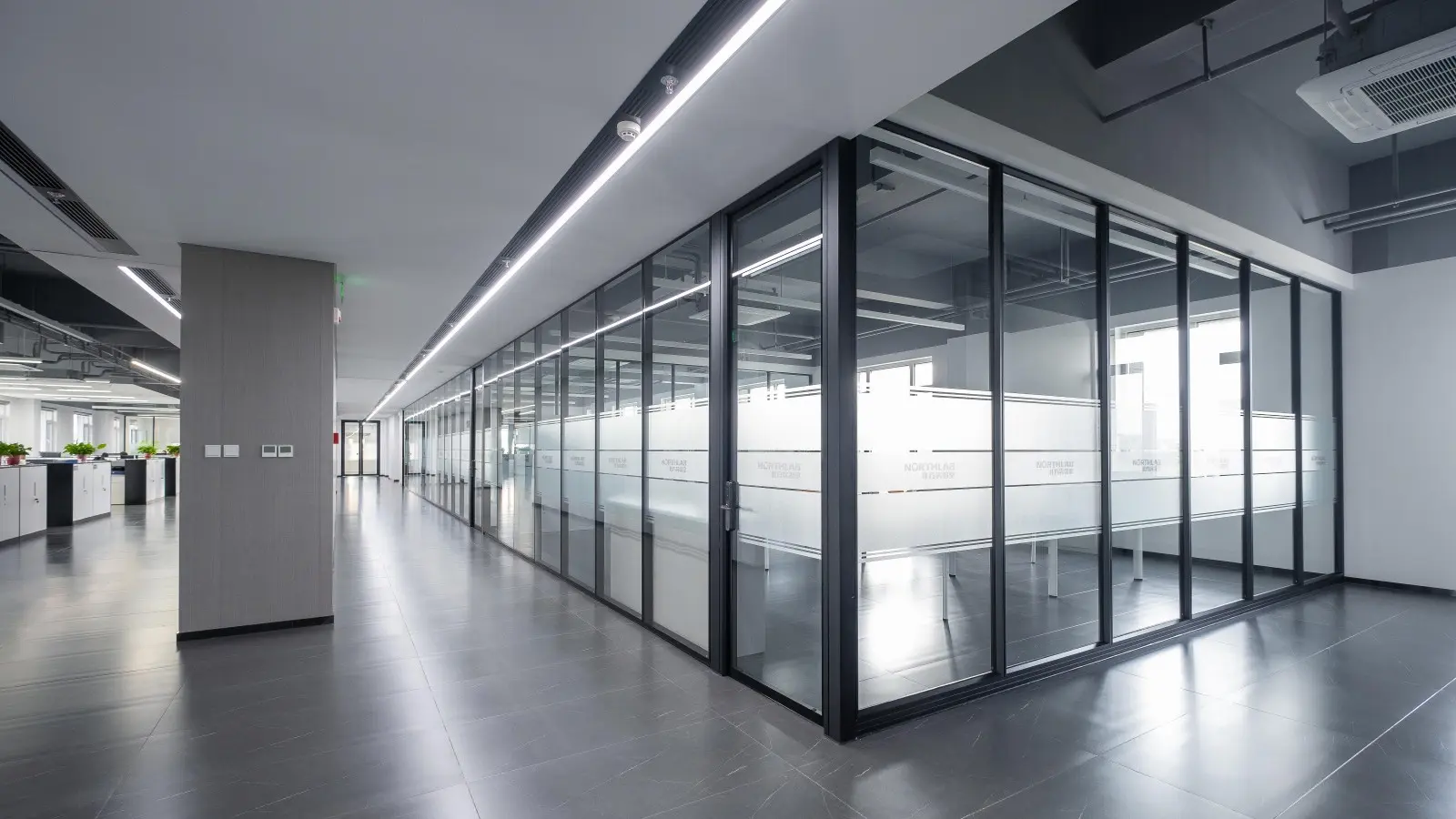
What dB Ratings Actually Feel Like in an Office
Spec sheets list acoustic performance as a single number — 30dB, 35dB, 40dB, 45dB. Architects know what these mean. Most clients don’t. Before deciding whether you need a double glazed glass partition, here’s what each rating produces experientially when someone is on the other side of the wall.
The standard measurement is ISO 717-1 weighted sound reduction (Rw), expressed in decibels. Lower number = more sound transmits through. Higher number = better isolation. The dB scale is logarithmic, so a 10dB difference roughly doubles perceived loudness — a 15dB difference is the practical line between “audible” and “near-silent.”
| Rating | What you actually hear | Appropriate for |
|---|---|---|
| 30dB (single-glazed standard) | Conversation audible as muffled voices. You can tell someone is talking and roughly identify the tone (excited, calm) but can’t make out specific words. | General private offices, standard meeting rooms, coworking pods, education faculty offices |
| 35dB (laminated single) | Voices reduce to a low murmur. You know someone is in there. Specific words occasionally audible during loud speech. | Mid-tier private offices, healthcare admin, light counselling, mid-size meeting rooms |
| 40dB (double-glazed standard) | Conversation becomes background-level ambient noise. You can hear that occupied rooms are different from empty ones, but specific speech is unintelligible. | Banking back-office, finance advisory, HR rooms, mid-tier healthcare consultation |
| 45dB (double-glazed premium) | Effectively silent from the corridor. You can stand outside and not realize the meeting is happening unless someone raises their voice loudly. | Boardrooms, executive offices, M&A advisory, legal counsel, premium healthcare consultation, video conference rooms |
The 30dB → 45dB upgrade is the difference between “people can tell something private is being discussed” and “no one outside knows a meeting is happening.” For boardroom and banking environments, that distinction directly affects compliance, M&A confidentiality, and patient privacy — making the double glazed glass partition upgrade not aesthetic, but functional. The 45dB threshold has become the de-facto standard for any double glazed glass partition in regulated environments — banking, healthcare, legal, government.
Single vs Double Glazed — Where the Extra 15dB Comes From
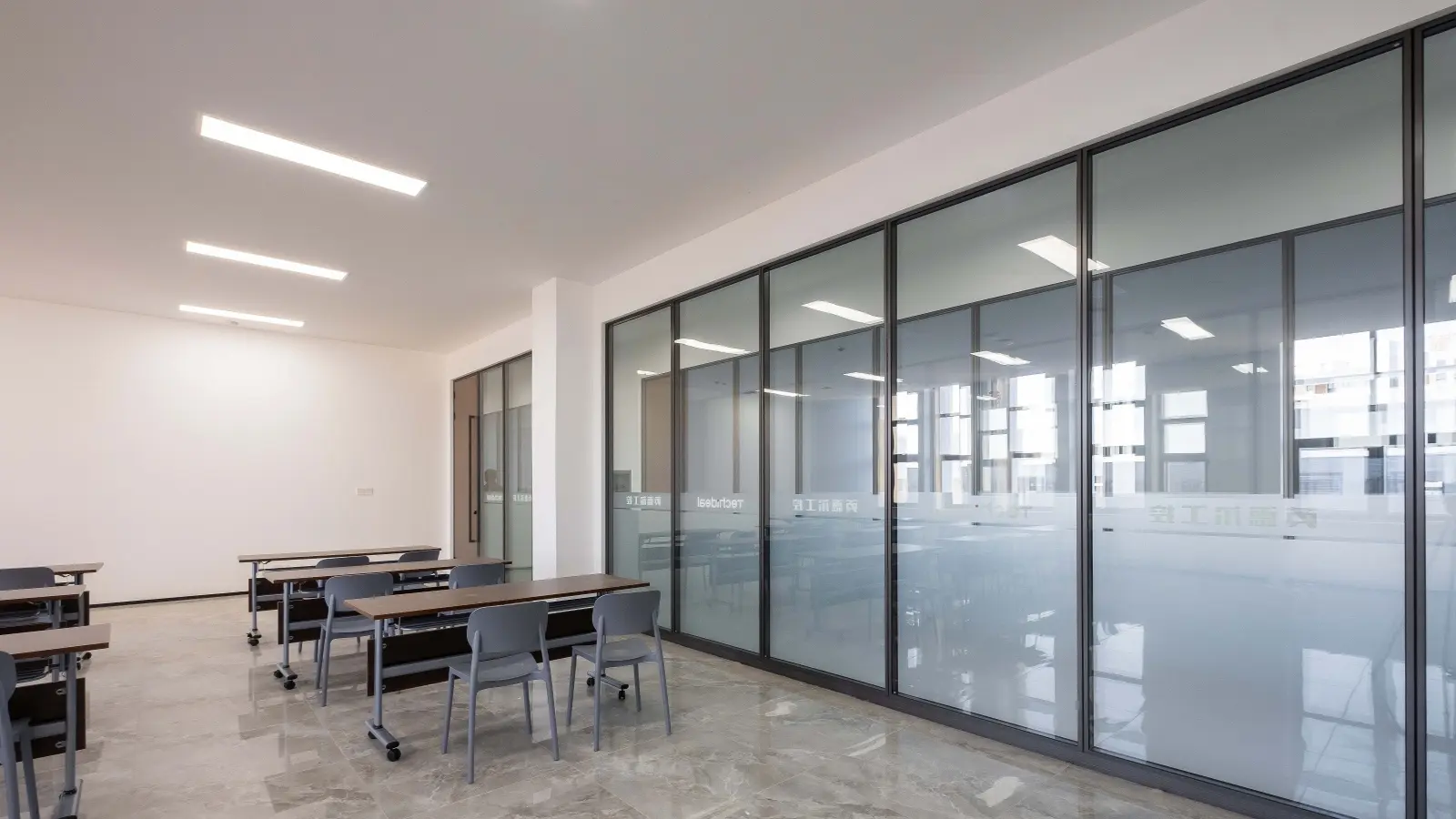
A standard single-glazed partition uses one layer of 8-12mm tempered glass. Sound waves travel through the glass mass once, are dampened by the glass density, and emerge on the other side at roughly the original frequency but with reduced amplitude. The net Rw is around 30dB.
A double glazed glass partition uses two layers of tempered glass (typically 5-8mm each) with a sealed air cavity between them. Sound waves now have to:
- Penetrate the first glass pane (partial loss)
- Cross the air gap — but the air mass and pane spacing absorb specific frequencies through resonance damping
- Penetrate the second glass pane (partial loss again)
The compounding effect produces 15dB additional isolation — not double the dB number, but exponential improvement in perceived privacy. The air cavity width matters: too narrow (under 30mm) and the system behaves like a thick single pane; too wide (over 100mm) and panel deflection becomes a structural issue.
Our Great Wall double uses a 47mm cavity. Our Everest double uses 64mm. Both reach the same 45dB peak — but the wider Everest cavity offers more room for integrated louvers and decorative inserts without compromising acoustic performance.
The integrated louver advantage
One question every project asks: what about visual privacy? A 45dB room without window coverings is still acoustically private but visually exposed.
The solution unique to double-glazed systems: venetian louvers installed inside the air cavity. Operated externally via knob or motorized switch, the blinds are completely protected from dust and damage — they never need cleaning, never get bent, and last the life of the partition. External blinds, by contrast, gather dust within 30 days and need replacement every 3-5 years in active offices. The integrated approach is one of the strongest TCO arguments for double-glazed beyond pure acoustics.
Three Double Glazed Configurations
Our double glazed glass partition systems split across three primary configurations. Each fits a different design brief and price point.
1. Great Wall Double Glass (visible frame)
The cost-effective baseline. Two layers of 5/6/8mm tempered glass with a 47mm air cavity, mounted in the standard 74mm Great Wall aluminum frame. Visible frame profile between panels, EPDM rubber gasket snap connection. Optional integrated louvers (knob or motorized). Acoustic rating: up to 45dB.
Specified for general boardrooms, mid-tier executive offices, healthcare consultation rooms, and corporate offices where the visible frame doesn’t conflict with the brief. Full specs and download.
2. Everest Double Glass (hidden frame, 3M bonded)
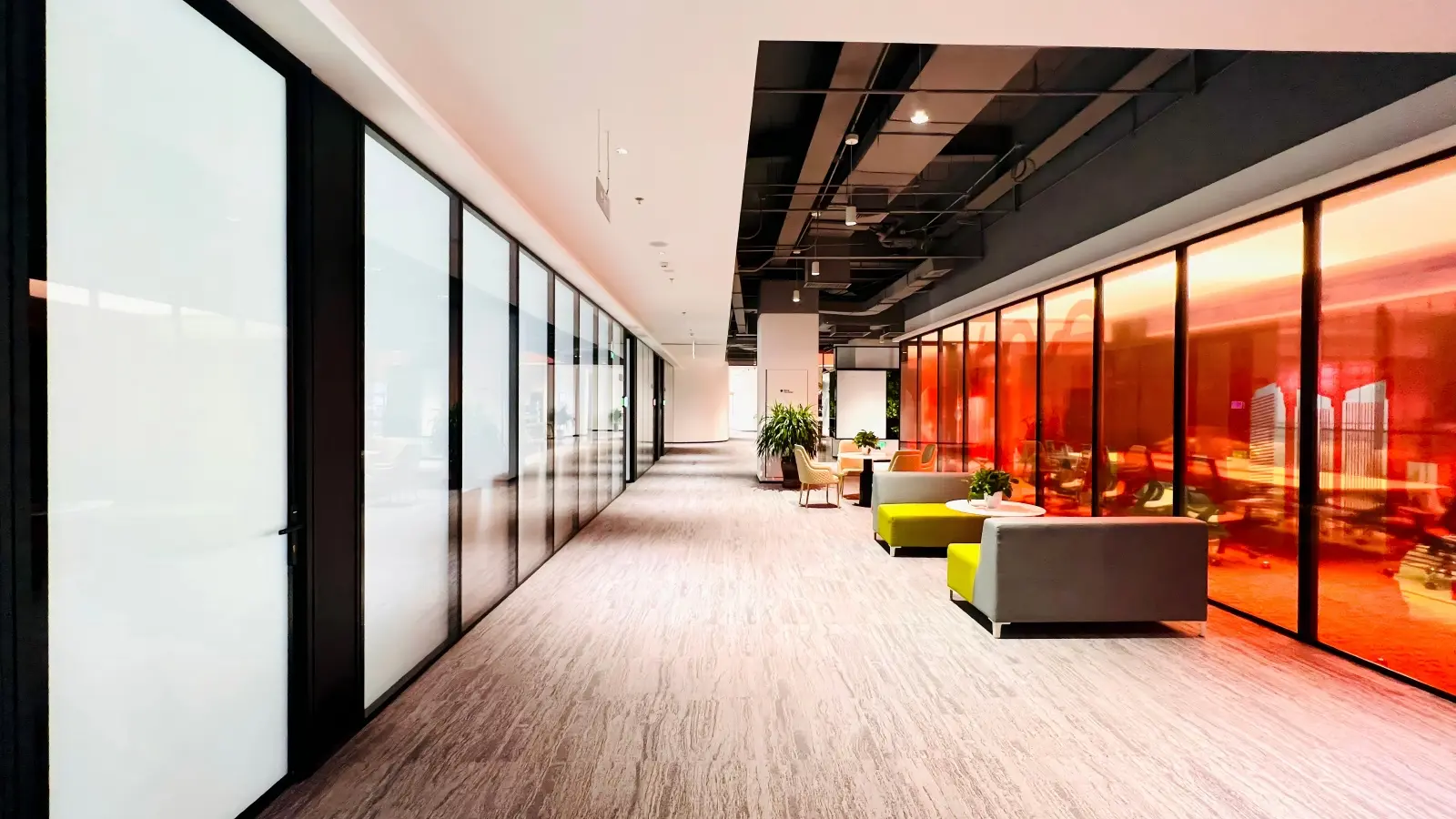
The premium curtain-wall aesthetic option. Two layers of tempered glass bonded to a recessed sub-frame using 3M VHB structural acrylic adhesive, with 64mm air cavity. Visible frame is eliminated — the partition reads as continuous glass. Same 45dB acoustic peak, with extra cavity room for fully integrated specialty infills (smart switchable glass, paint glass, decorative tinted glass).
Specified for executive boardrooms, premium reception, hospitality, and projects where the architectural brief calls for “curtain wall, not partition.” Full specs and download.
3. Double glazed with built-in louvers (either series)
Both Great Wall and Everest double can be specified with the integrated louver option. Three operating modes:
- Manual knob — external knob operates tilt and lift mechanism. Lowest cost, most reliable, requires occupant action.
- Motorized with switch — wall-mounted toggle or rocker switch operates electric motor. Adds ~$200/m² to the cost. Good for executive rooms where staff don’t want to fiddle with controls.
- Motorized with smart home integration — REST API or Zigbee control for integration with conference room booking systems. Louvers can auto-close when a meeting starts.
The louver option adds about 15-25% to the partition cost depending on operating mode, and adds about 1-2 working days to the install. For boardroom and consultation use cases, it’s near-universal — for general meeting rooms it’s often skipped in favor of external blinds.
Real Installations: Where Double Glazed Was Specified
Three projects from our reference list, each with a specific brief that drove the double glazed glass partition specification. The same double glazed glass partition platform serves all three, configured differently for each acoustic tier:
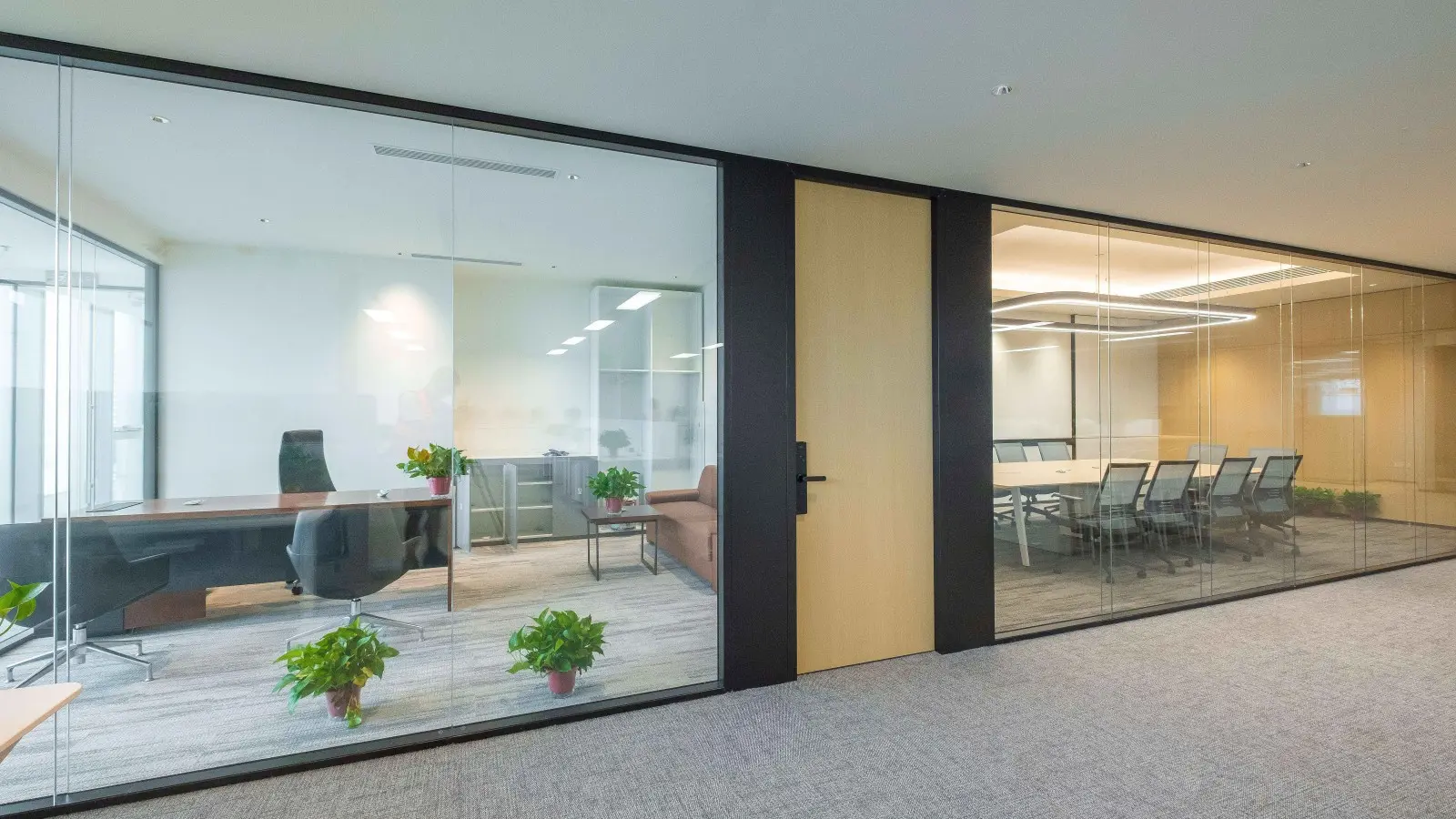
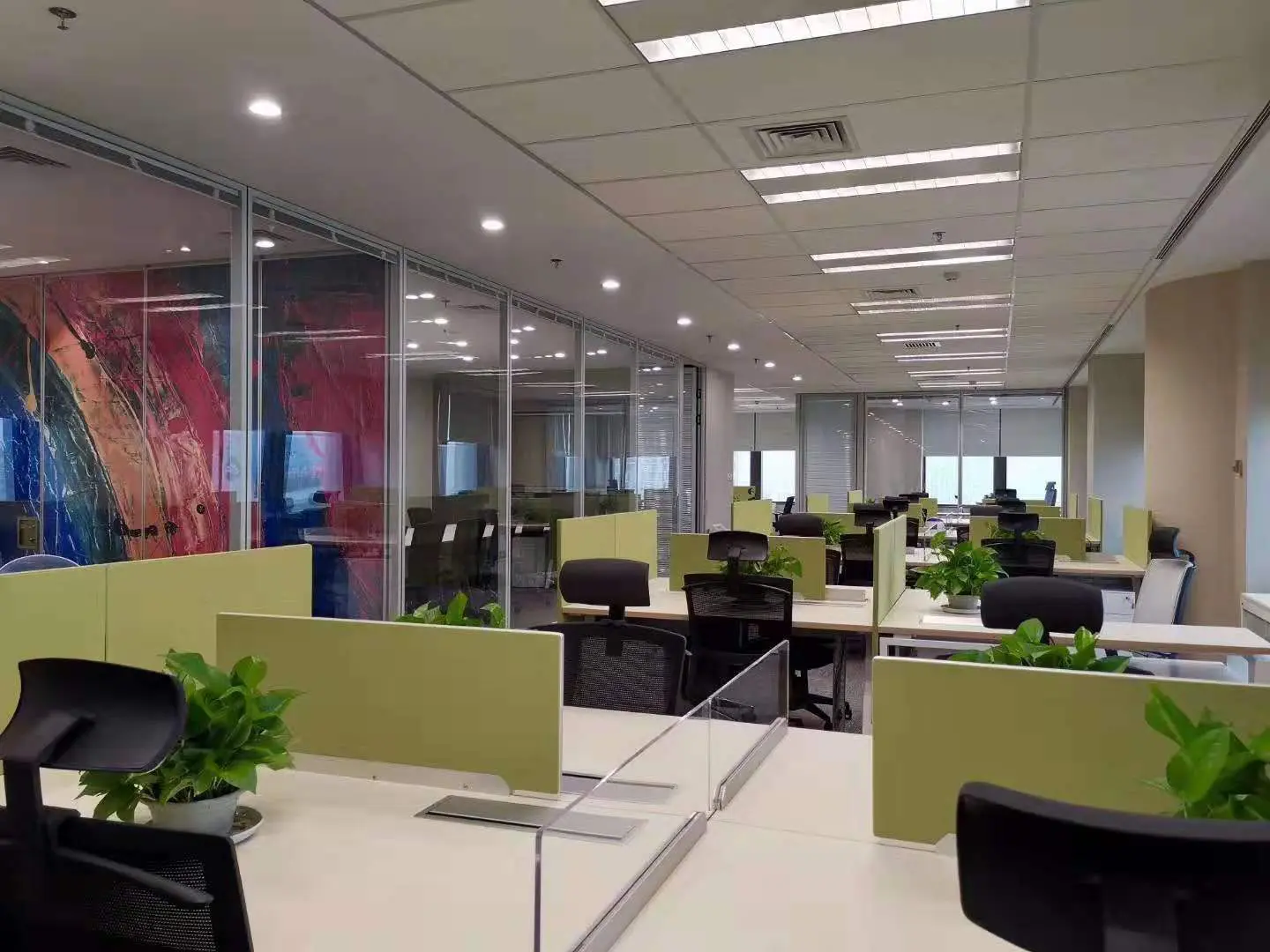
The Cushman & Wakefield approach — mixing single and double glazed within one floor — is increasingly common. There’s no rule that says you have to specify one tier across the whole floor. Use double glazed where the privacy brief demands it, save the cost premium where it doesn’t.
When Single Glazed Is Actually Enough
This guide would oversell the double glazed glass partition as a universal solution if we didn’t note the cases where you shouldn’t bother. Four scenarios where the 15dB upgrade is wasted:
1. General private offices for individual contributors
The privacy concern in a one-person office is mostly visual, not acoustic — the occupant isn’t running confidential calls all day. 30dB single-glazed handles “I’m focused, don’t interrupt me” perfectly. Save the budget for the boardroom.
2. Open-plan environments where ambient noise is already high
If your open office floor has a baseline ambient noise level of 50-55dB (coworking spaces, sales floors, customer service centers), the partition’s job is reducing speech intelligibility, not eliminating sound entirely. Single-glazed at 30dB drops conversations below the ambient threshold and you stop noticing them. Double-glazed adds no perceptible benefit here.
3. Mid-frequency conversations (most office talk)
Acoustic dB ratings are averaged across the speech spectrum. They work best at mid-frequency conversation (200-2000Hz). They under-perform at low-frequency rumble (bass voices, machinery) and over-perform at high-frequency squeak. For typical office conversation, the 30dB single-glazed rating is actually closer to 32-33dB effective — narrowing the practical gap with double-glazed to maybe 10-12dB instead of 15dB.
4. Spaces where occupants control conversation volume
Executive offices and boardrooms can self-regulate. If the meeting needs to be quiet, occupants lower their voices. If the topic is non-sensitive, normal volume is fine. For occupants with this discretion, single-glazed plus occupant awareness performs adequately. Where occupants can’t control volume — phone calls, video conferences, group brainstorming — double-glazed earns its premium.
Frequently Asked Questions
What’s the cost difference between single and double glazed glass partition?
Double glazed typically costs 35-50% more than single glazed at equivalent square meter coverage. The premium covers the additional glass layer, cavity spacers and seals, deeper frame profile, and the integrated louver assembly if specified. For a 100 m² boardroom suite, the upgrade cost is usually $8,000-$15,000 over single glazed — paid back over the lifetime of the room through confidentiality risk reduction.
Are the integrated louvers really maintenance-free?
The louver mechanism inside the cavity is sealed from the room environment — no dust accumulation, no fingerprint marks, no warping from temperature changes. Motorized versions need occasional motor service (every 5-7 years for high-use rooms), but the louvers themselves last the life of the partition. Compare to external blinds which typically need replacement every 3-5 years in active offices.
Does double glazed help with thermal insulation too?
Yes, modestly. The 47mm or 64mm air cavity provides thermal resistance equivalent to roughly R-1.5 to R-2 (US units), reducing heat transfer between zones with different HVAC setpoints. Useful in healthcare facilities where treatment rooms and corridors run at different temperatures, or in mixed-use buildings where boardrooms have separate climate zones. Not significant enough to be a primary justification, but a useful side benefit.
Can I retrofit single glazed partitions to double glazed?
In our modular systems, partial retrofit is possible — you swap the glass panels but keep the floor and ceiling tracks. The deeper double-glazed assembly requires a wider frame profile, which means new vertical mullions. Practical retrofit cost is about 60-70% of new install, with same install time. For projects planning a future upgrade, specify the deeper frame from day one even with single glass — then panel swap when the brief changes.
Is 45dB enough for video conferencing with confidential content?
For most corporate video calls, yes. 45dB drops the conversation to background-ambient level outside the room — anyone in the corridor would need to deliberately try to overhear, and even then would only catch fragments. For genuinely sensitive content (M&A negotiations, legal depositions, classified discussions), specify 45dB plus a sound masking system in the adjacent corridor to push the effective isolation above 50dB. The WELL Building Standard acoustic comfort guidance provides detailed thresholds by use case.
How does flanking transmission affect real-world acoustic performance?
The 45dB lab rating assumes ideal conditions — no sound bypasses around the partition. In real installations, sound can flank through the ceiling plenum (if the partition doesn’t reach the deck), under the floor (raised access floors), or through HVAC ducts. Realistic field performance is typically 5-7dB below lab Rw. To hit 45dB effective, specify partition-to-deck installation with sealed perimeter, transfer ducts with acoustic baffles, and avoid back-to-back outlet boxes that telegraph through the wall.
Specify the Right Acoustic Tier for Each Room
Send your floor plan with room functions labeled (general office / meeting / boardroom / advisory). Our application engineers respond within 24 hours with a recommended acoustic tier per room — including the cases where mixing single and double glazed within one floor saves budget without compromising the confidential rooms.