Glass Partition Manufacturer UAE: 6 Critical Questions First
Six questions to ask any glass partition manufacturer before importing for a UAE or GCC project — Gulf climate performance, local fire code, real lead times, and proof of export-scale execution.

If you are speccing or sourcing glass office partitions for a project in Dubai, Abu Dhabi, or elsewhere in the GCC, you already know the local market is crowded with installers.
What is harder to find is an actual glass partition manufacturer who can supply a GCC project at scale, on a predictable schedule, with the same system used on thousands of projects elsewhere. This guide walks through six questions worth asking before you commit to one — the same questions we expect our own UAE and Gulf clients to ask us.
The timing matters. Industry analysts covering the region have tracked steady growth in GCC commercial construction activity year over year, and fit-out contractors are increasingly sourcing interior systems — including glass partitions — directly from an overseas glass partition manufacturer rather than through multiple layers of local subcontracting, mainly to control cost and lead time on fast-moving fit-out programs.
1. Can the glass system actually handle Gulf heat and UV exposure?
This is the first thing any glass partition manufacturer selling into the UAE should be asked, and the most commonly overlooked. A partition system engineered for a temperate climate can perform very differently once it sits behind floor-to-ceiling curtain wall glazing in Dubai, where solar heat gain inside the building envelope is significantly higher than in most markets a manufacturer’s standard catalog was designed for.
Two things to check with any glass partition manufacturer: whether tempered/safety glass is standard — not optional — across the full product range, and whether tinted, frosted, or switchable glass options exist for zones with direct solar exposure.
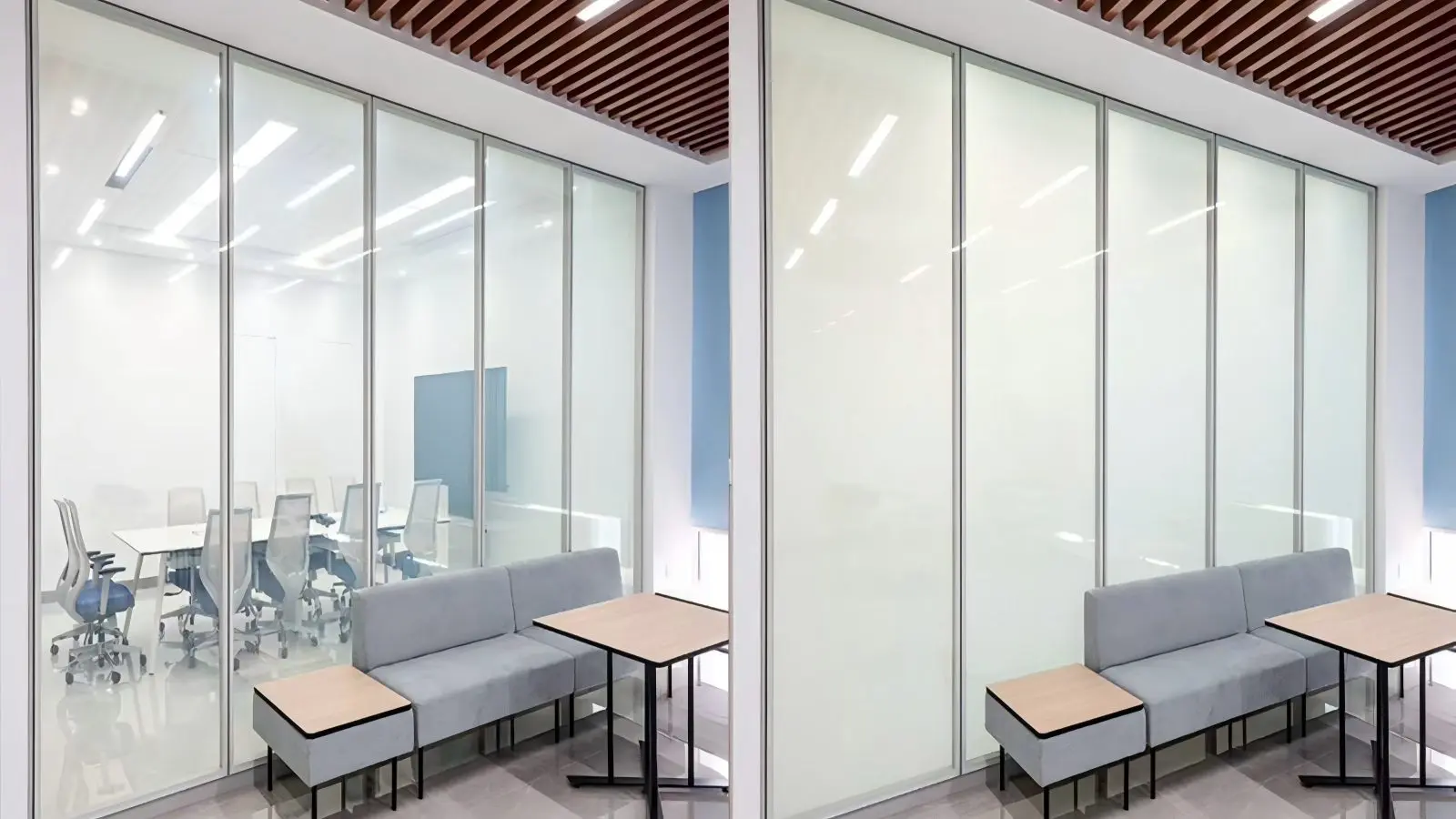
Our Smart Glass partition system switches from clear to opaque privacy mode instantly and is a common request from Gulf clients who want solar and glare control without permanent film or blinds. For acoustic-sensitive rooms — boardrooms, executive offices — the Everest double-glazed system adds a second glass layer with an air gap, which also improves thermal performance compared to single-pane framed partitions.
2. Will it meet the building’s fire and life-safety requirements?
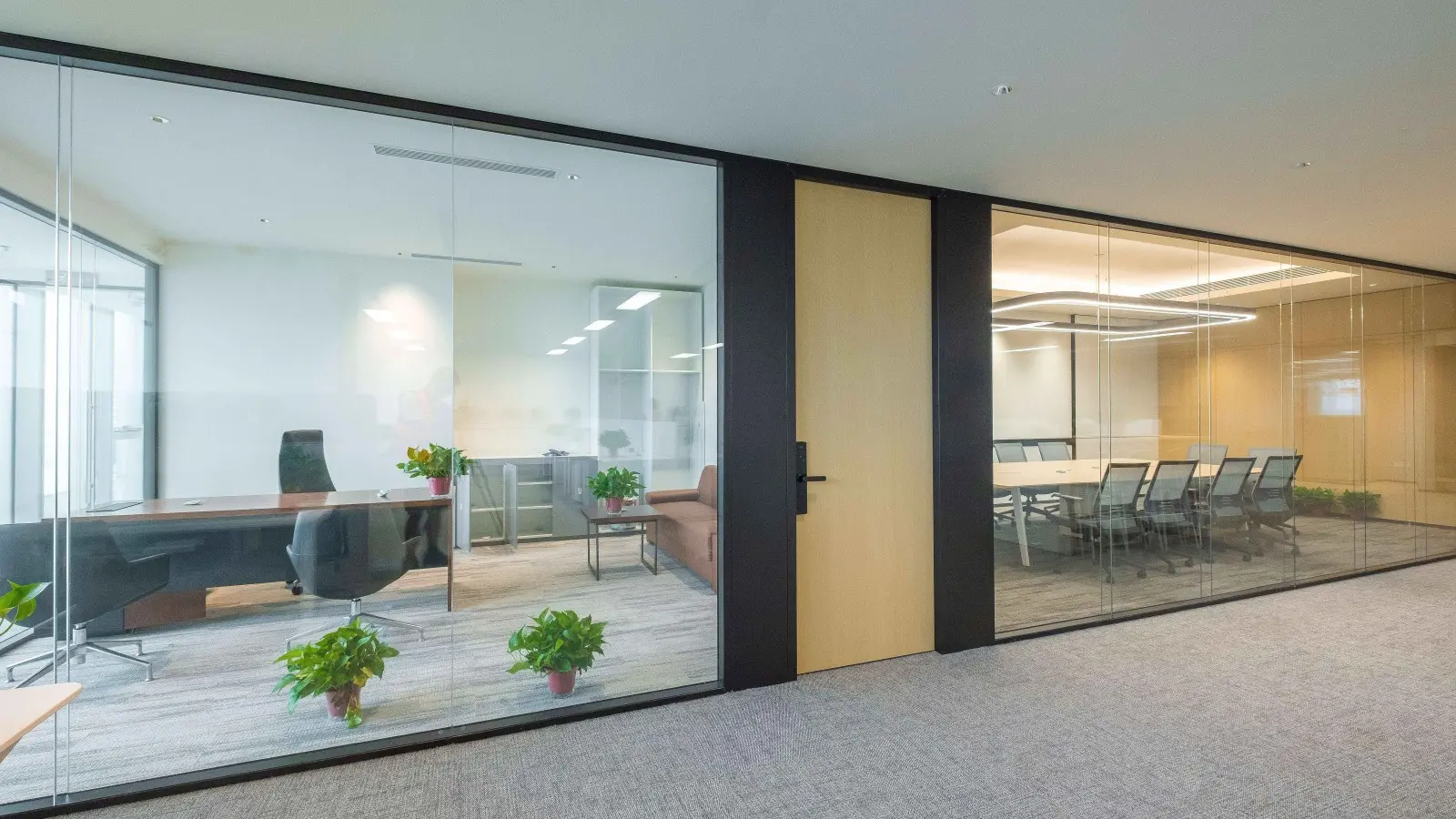
Every glass partition manufacturer should be able to provide tempered or laminated safety glass with documented test data. But fire and life-safety compliance in the UAE is enforced locally — through Dubai Civil Defence and the UAE Fire and Life Safety Code of Practice — and requirements can vary by emirate, building use, and free zone authority. This is not something to take a supplier’s word for.
Our honest recommendation: whichever glass partition manufacturer you work with, ask them for the actual test certificates for the specific glass and framing configuration you plan to use, and have your local fire consultant or civil defence liaison confirm those certificates satisfy the project’s specific approval requirements before ordering. We manufacture to international glass safety standards and provide full technical documentation on request, but we are not a substitute for local code sign-off — no overseas manufacturer should claim to be.
3. What is the real lead time from factory to site?
“Lead time” quoted by a glass partition manufacturer usually means production time only — it often excludes ocean freight, customs clearance at Jebel Ali or another UAE port, and inland delivery to site. Freight forwarders who specialize in shipping building materials to the UAE generally recommend asking for a landed lead time, not a factory lead time, and building in a buffer for peak shipping seasons when container availability from China tightens.
Because our systems are modular and pre-engineered rather than custom-fabricated on site, production and packing timelines are predictable and repeatable across export orders — but we always tell GCC clients to plan the shipping leg separately with their freight forwarder, since transit time to Jebel Ali varies by carrier and season.
4. Is the system actually demountable — or just marketed that way?
Free zone leases, fast-growing companies, and coworking operators across the Gulf change floor plans often, sometimes multiple times within a single lease term. A glass partition manufacturer whose system is bolted, glued, or otherwise permanently fixed in place is effectively selling you drywall with a nicer finish — you lose the reconfiguration value the moment you need to move a wall.
True demountability means the panels, framing, and doors can be unbolted, relocated, and reinstalled without replacement. Roughly 95% of the materials in our modular partition systems are designed to be reused this way, which is also why they hold resale and relocation value that fixed partition walls don’t.
5. Can one manufacturer supply the glass, the doors, and the hardware?
Coordinating separate suppliers for partition glass, doors, and ironmongery adds a layer of scheduling risk to any fit-out — more so on an import project where each supplier may ship from a different origin. A glass partition manufacturer that also engineers its own matching door systems — sliding, framed, or fully frameless — removes one coordination point and one shipping consolidation from the project.
6. Has the manufacturer actually executed at this scale before?
This is the question that separates a manufacturer from a trading company reselling someone else’s glass. Ask to see real, completed projects — not renders.
We have supplied and installed modular glass partition systems on more than 10,000 commercial fit-outs across 90+ countries since 2004, including large-scale industrial and corporate campuses such as our BMW Brilliance Tiexi manufacturing base project and banking-grade fit-outs like our work for China Merchants Bank. These are not UAE projects, and we’re upfront about that, but they demonstrate the same engineering, quality control, and production process that any GCC order would go through.
What actually drives cost on a GCC export order
Price quotes from one glass partition manufacturer to another can look wildly different for reasons that have nothing to do with glass quality. For an export order specifically, the line items worth comparing are: glass specification (tempered vs. double-glazed vs. switchable smart glass), framing finish, order volume relative to a full-container load, and the shipping incoterm you’re quoted under — an FOB price and a DDP-to-Jebel-Ali price from the same manufacturer can differ substantially once freight, insurance, and customs duty are added back in.
If you want the general breakdown of what drives glass partition pricing regardless of destination, we cover it in more depth in our glass partition cost guide; the difference for a GCC order is mainly the shipping and incoterm layer on top of that.
Customization: matching the finish level Gulf projects expect
Premium finish and branding integration matter more on Gulf commercial fit-outs than in many other export markets we serve — a glass partition manufacturer quoting a bare-bones catalog configuration is often not accounting for this.
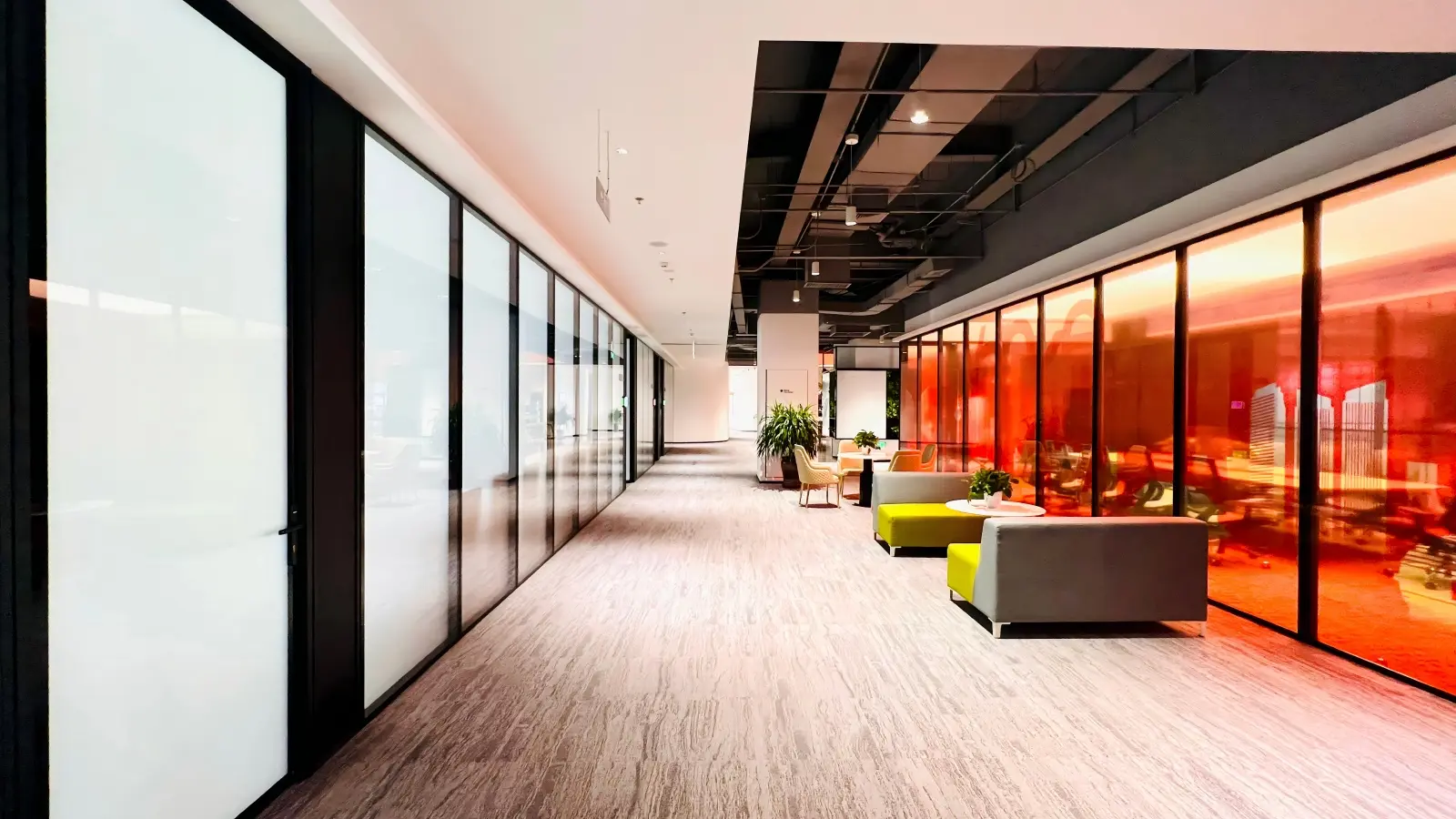
Framing color, glass tinting, printed or etched branding on glass panels, and curved or decorative profile options are all standard customization requests we’ve engineered for corporate and coworking clients elsewhere; the same options extend to export orders, and none of them require a different base product line, only a different finish spec on the same modular system.
Six questions, at a glance
| Question to ask | Why it matters for a GCC order |
|---|---|
| Does the glass handle Gulf heat/UV? | Standard catalog glass may not suit high solar-gain facades |
| Does it meet local fire/life-safety rules? | Enforced locally by Dubai Civil Defence and emirate-specific codes |
| What’s the landed lead time, not factory lead time? | Ocean freight and customs at Jebel Ali add weeks, not days |
| Is it genuinely demountable? | Free zone leases and fast-growing tenants relocate often |
| Does one supplier cover glass, doors, and hardware? | Fewer shipping origins and coordination points |
| Has the manufacturer executed at this scale before? | Separates a real manufacturer from a reseller |
What this means if you’re sourcing for a Gulf project right now
If you are evaluating more than one glass partition manufacturer for a UAE or wider GCC project, run each of them through these six questions before comparing price. A manufacturer that answers clearly — including admitting where local certification or on-the-ground presence isn’t something they can provide — is a safer long-term supplier than one that overpromises regional credentials it doesn’t actually have.
Frequently Asked Questions
Does MS Office Systems export glass partitions to the UAE and wider GCC?
Yes. As a glass partition manufacturer, we regularly export our modular systems to international markets — 90+ countries to date — and can quote and ship to UAE ports including Jebel Ali. We recommend involving your freight forwarder early to confirm landed lead times for your specific project schedule.
What is the typical shipping route and lead time to Dubai?
Orders typically ship by sea freight from China to Jebel Ali, with production lead time separate from ocean transit and customs clearance. Exact timelines depend on order size, current container availability, and the season — ask any glass partition manufacturer you’re evaluating for a landed-time estimate, not just a factory lead time.
Can your glass partitions meet UAE fire safety and thermal performance requirements?
Our systems use tempered and laminated safety glass as standard, with tinted, frosted, and switchable smart glass options for high-solar-gain areas. Because fire and life-safety approval in the UAE is enforced locally through Dubai Civil Defence, we provide full technical and test documentation so your local consultant can confirm compliance for your specific project and emirate.
Is there a minimum order quantity for export orders?
Minimum order quantities vary by product line and configuration — contact us with your project’s approximate floor area and we’ll confirm feasibility and a quote for your specific scope.
Which product line performs best in a hot, high-solar-gain climate like the Gulf?
For solar and glare control, our Smart Glass switchable system is the most requested option from Gulf clients. For acoustic-sensitive rooms that also need better thermal performance than single-pane framed partitions, the Everest double-glazed system is the stronger fit.
Have a GCC project in planning and want a quote or technical documentation from a glass partition manufacturer that’s shipped to 90+ countries? Get in touch with our export team.