Paint Glass Partition

A paint glass partition is back-painted architectural glass with paint applied to the room-side surface — the visible face reads as a monolithic solid-color wall while the reverse-side glass retains all the engineering advantages of glass construction. This guide walks through what paint glass partition actually is at the material level, six proven color category strategies, three high-impact office applications, and 10-year total cost of ownership compared against painted drywall alternatives.
What is Paint Glass Partition — The Material Explained
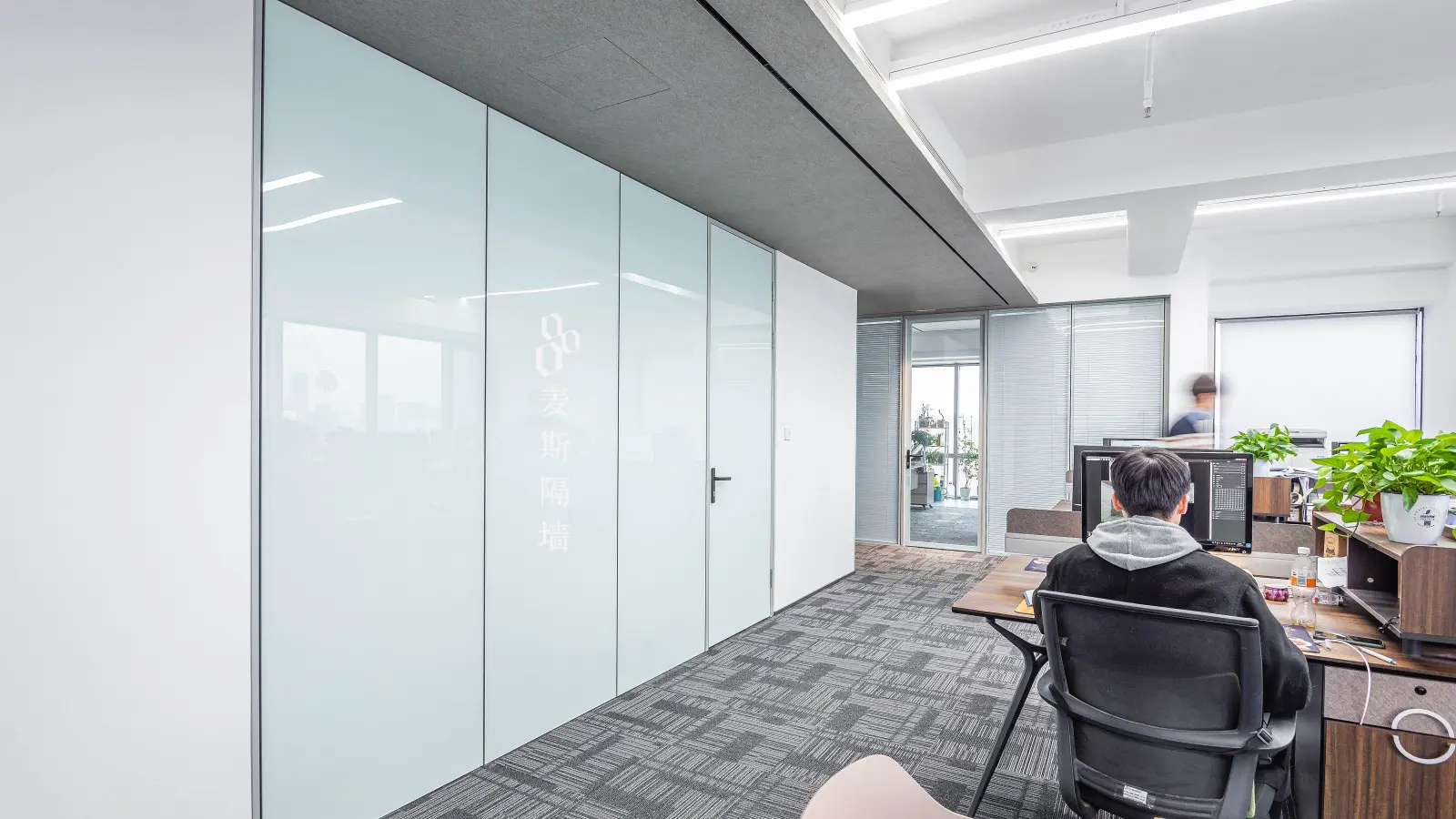
A paint glass partition is architectural glass with a proprietary paint coating bonded to the back (non-visible) surface of the panel. The front-facing side remains float or low-iron glass, which means what a user sees is a glossy or satin glass surface with the color depth of the paint layer showing through — not paint sitting on top of the glass. The difference is significant both visually and functionally.
How the paint is applied
The paint layer is factory-applied to the back face of the glass panel using either roller coating (economical) or spray coating (premium finish quality) with acrylic, polyurethane, or ceramic paint chemistries. After application, the panel is oven-cured at controlled temperatures to bond the paint permanently to the glass. When the finished panel is installed with the paint-side facing away from the occupant, the glass surface protects the paint from any contact, cleaning chemicals, or wear — the paint is effectively encapsulated between the glass and the wall.
Why this beats surface-painted alternatives
Compared to painted drywall or powder-coated metal panels — which have the color layer exposed to daily use — a back-painted paint glass partition is essentially impossible to scratch, chip, or fade at the visible surface. The paint layer is behind glass. This shows up in operating cost: painted drywall requires touch-ups every 3-5 years in high-traffic areas, while paint glass panels routinely go 15-20 years without any refinishing.
The visual quality that surface paint can’t match
Because the paint is viewed through the glass rather than directly, the color takes on depth and reflectivity that flat surface paint cannot achieve. Architects and interior designers specify paint glass specifically when they want the color to read as “wet look” or “lacquer finish” rather than the matte quality of standard paint. This is the same visual principle that makes automotive paint look richer than architectural paint — light bounces through a transparent layer before reaching the pigment.
Paint Glass vs 4 Finish Alternatives
Before deciding on a paint glass partition, understand where four alternative finish approaches win or lose against it:
| Finish Type | Initial Cost | 10-Year Lifecycle | Best Use Case |
|---|---|---|---|
| Paint Glass Partition | Baseline | Zero touch-up | Feature walls, brand statement |
| Painted Drywall | −40% | 2-3 touch-up cycles | Non-visible interior walls |
| Powder-Coated Steel Panel | −15% | Minor scratch repair | Industrial aesthetic contexts |
| Vinyl Film Wrap on Glass | −30% | Full replacement 5-7 yr | Temporary graphics, wayfinding |
| Solid Panel Partition | −10% | Zero touch-up | See solid partition range for full comparison |
The three cases where paint glass partition beats every alternative:
- The color depth matters — When the architectural intent calls for a lacquer-quality finish that surface paint can’t produce.
- The wall is a high-touch surface — Reception walls, executive office doors, high-traffic corridor sections where painted alternatives would show wear.
- The finish needs to match the rest of the partition system — When adjacent walls use Great Wall or Everest glass systems, paint glass integrates using the same mullion profile without visual break.
The 6 Proven Color Category Strategies
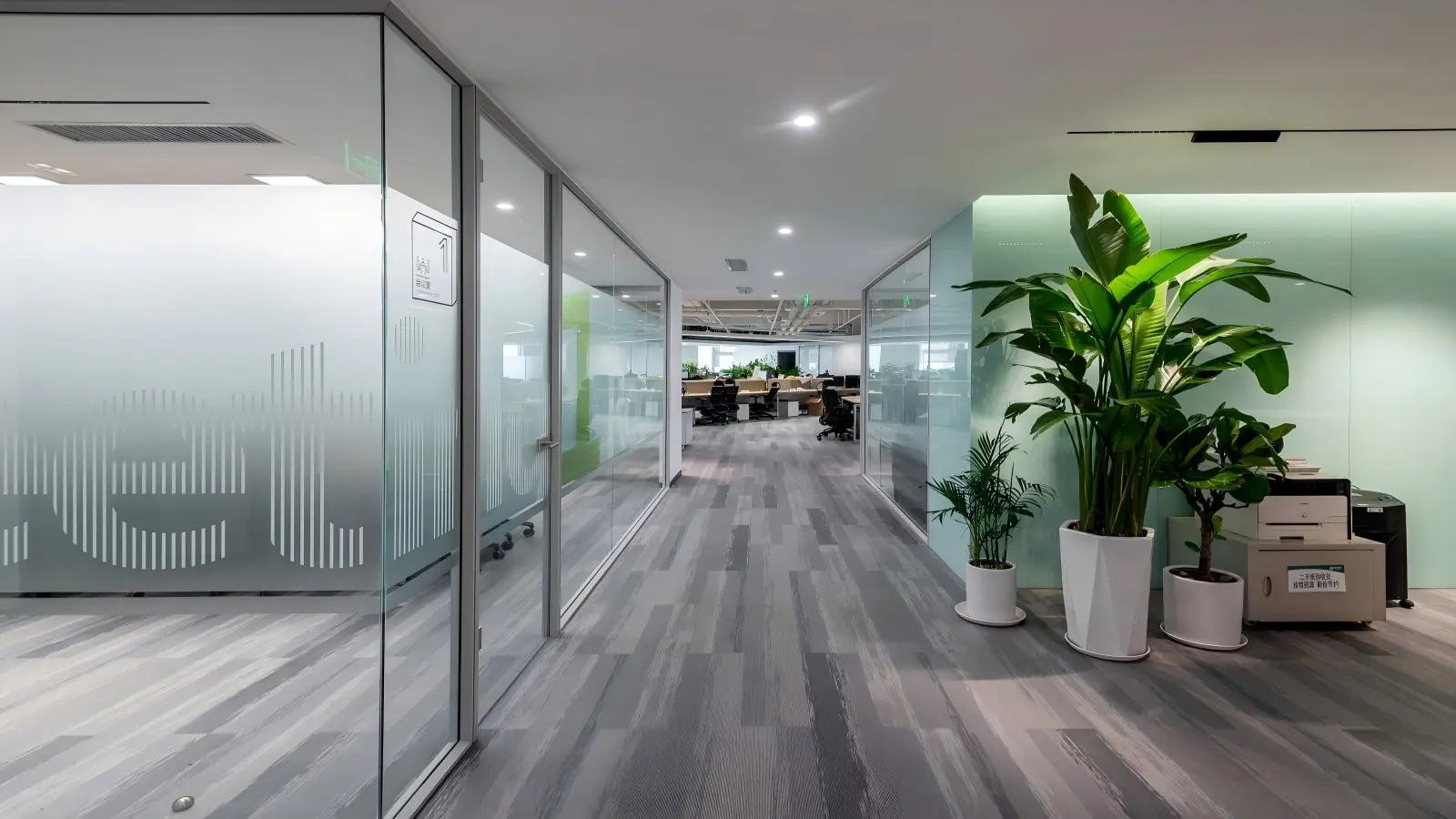
The 200+ paint glass installations our team has shipped fall into six color category strategies. Most projects mix 2-3 categories rather than sticking to one; the categories are strategic starting points, not exclusive choices.
Category 1: Architectural Whites (RAL 9010, RAL 9016, Off-White Custom)
The volume-default for corporate offices that want the paint glass finish benefit without a color commitment. Architectural whites read as clean, modern, and neutral — they photograph well for corporate communications, coordinate with any furniture program, and don’t age visually the way trend colors do. About 40% of paint glass specifications land in this category.
Category 2: Warm Neutrals (Soft Taupe, Warm Grey, Champagne)
The upgrade from architectural white when the space wants residential warmth. Popular in executive offices, C-suite reception areas, and law firms where the aesthetic goal is “premium approachable” rather than “corporate white.” Warm neutrals hide occupant reflection better than architectural whites, which matters in bright rooms.
Category 3: Corporate Brand Colors (Custom Match)
Custom-matched to the client’s Pantone brand color or an approved variant. Reception walls, brand statement corridors, and any surface that gets photographed with the corporate identity. Requires paint sample approval process before manufacturing — typically adds 5-7 working days to lead time but delivers the “instantly recognizable brand” impact that no other finish approach matches.
Category 4: Deep Saturated Tones (Navy, Forest Green, Deep Charcoal)
The premium-drama category. Deep colors read as sophisticated and expensive when applied to paint glass — the glass surface amplifies the depth. Best used sparingly (single feature wall, executive office accent) rather than throughout a floor plate. Common in creative agencies, hospitality-adjacent office design, and premium co-working operators.
Category 5: Metallic Finishes (Champagne Gold, Antique Bronze, Brushed Silver)
The most expensive category — metallic pigments cost 2-3× standard pigments — but delivers a finish quality that architectural coatings on other substrates struggle to match. Typical applications: reception feature walls in law firms, financial services, luxury retail HQ offices. Not for volume applications; specify metallic finishes for the specific walls where the added cost delivers visible impact.
Category 6: Custom RAL / NCS System Match
Any color from the ISO 7599 aluminum finishing standards-compatible RAL system, or from the Scandinavian NCS system. This is the “we designed a specific color and need it exactly” category — common in projects with published architectural specifications or interior designer color schemes. Match tolerance: typically Delta-E under 2.0 (imperceptible difference under normal viewing).
3 High-Impact Office Applications
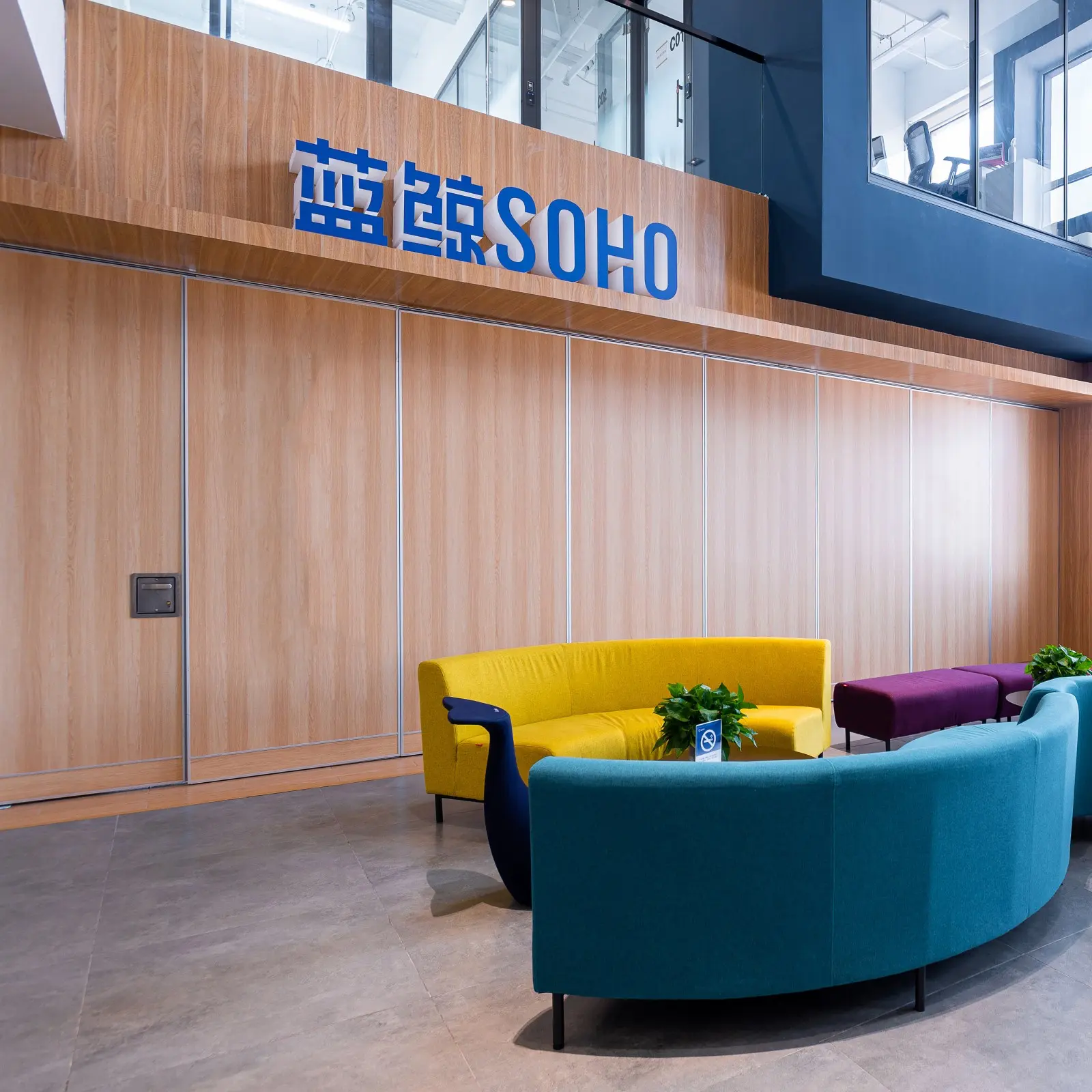
Application 1: Reception Feature Walls
Reception is where paint glass partition delivers the highest return on cost premium. The reception wall is the single most photographed and reviewed surface in the entire office — every visitor sees it, corporate marketing photographs it, executive interviews use it as backdrop. The color depth and finish quality of paint glass produces a reception wall that reads as premium in every photograph, whereas painted drywall photographs as flat and generic.
Typical reception paint glass specification: single feature wall behind the reception desk in a brand color or premium neutral, 3-5 meters wide by full ceiling height. Optionally paired with a matched-color logo cutout or wayfinding graphics applied to the paint layer during manufacturing. Cost impact for a typical reception installation: $6,000-$12,000 depending on wall size and finish tier.
Application 2: Executive Private Offices
Executive offices are the second-highest ROI paint glass application. The specification logic differs from reception: what matters here is the combination of complete visual privacy (paint glass is opaque, unlike clear glass partition) and finish quality that signals the executive’s tier within the organization. See our solid partition applications guide for the executive office use case in more depth — paint glass is essentially the “premium finish” version of the solid partition executive office approach.
Typical executive office paint glass specification: the wall shared with the general office area (corridor-facing) in a corporate brand color or warm neutral, other walls in matched-mullion glass or drywall. This mix delivers privacy where it matters (facing the office) while preserving natural light through the exterior-facing wall.
Application 3: Meeting Rooms with Combined Acoustic + Color Specification
The third application combines paint glass with acoustic performance requirements. When a meeting room needs both acoustic isolation (Rw 40+ dB) and finish quality that reads as premium, paint glass on the corridor-facing wall paired with acoustic-priority solid panels on the other walls delivers both. This is a common specification for board rooms, executive meeting spaces, and client-facing conference rooms in professional services offices.
The acoustic-plus-color combination is also used in double-glazed acoustic glass systems where the internal cavity of the double-glazed assembly houses the paint layer, delivering acoustic and color benefit simultaneously.
Cost & 10-Year Lifecycle Analysis
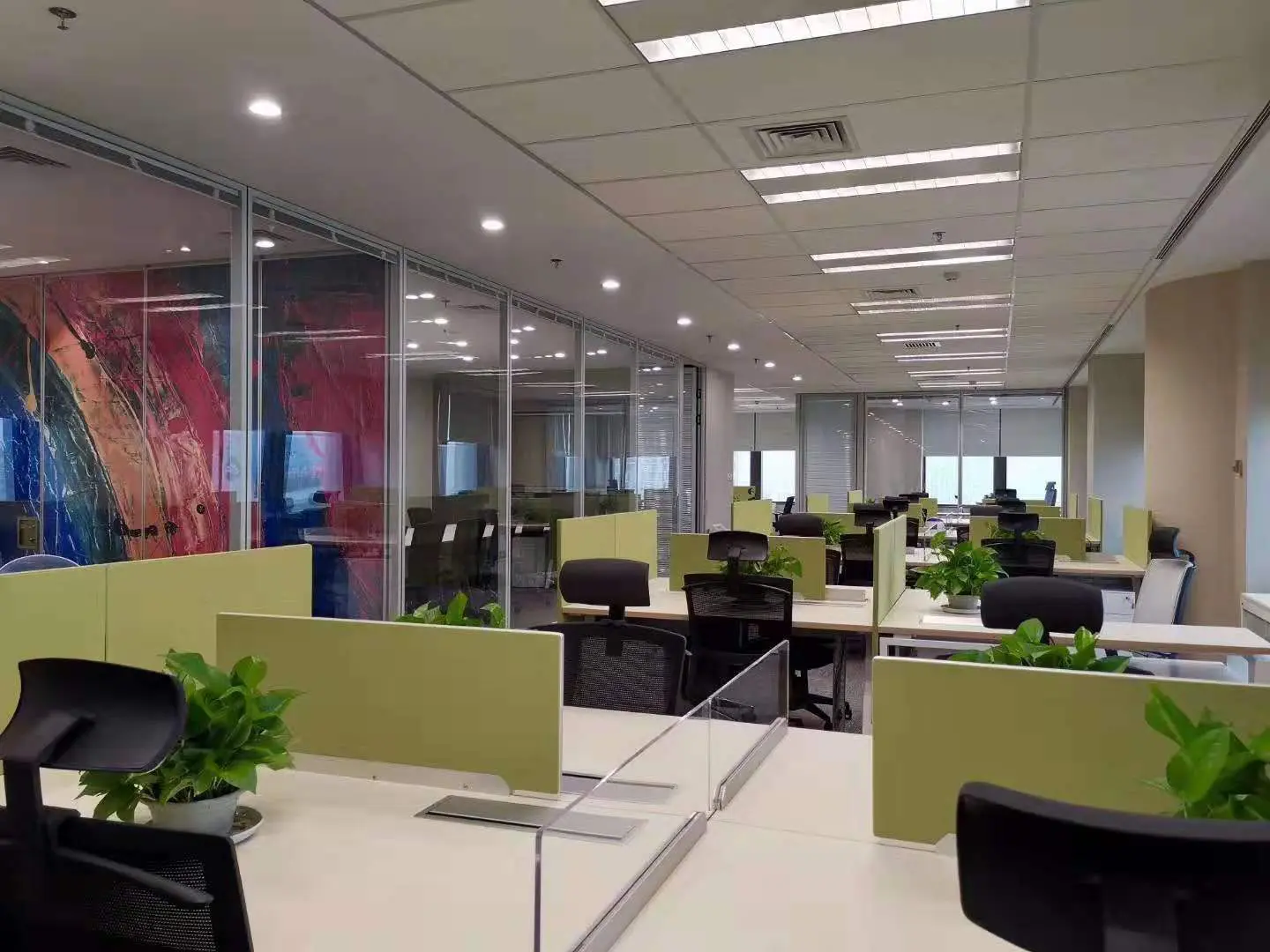
The unit-price comparison (“paint glass costs more than paint”) tells only part of the story. The full comparison requires looking at 10-year total lifecycle costs including refinishing, touch-ups, and disposition at end of use.
Cost breakdown: paint glass vs painted drywall over 10 years
| Cost Component | Paint Glass Partition | Painted Drywall |
|---|---|---|
| Initial material + installation | $180 / m² | $110 / m² |
| Year 3 touch-up (high-traffic areas) | $0 | $25 / m² |
| Year 6 refresh coat | $0 | $45 / m² |
| Year 8 damage repair (typical) | $0 | $30 / m² |
| Reconfiguration flexibility (Year 5-7 typical) | Demountable, 90% material reuse | Demolition + reconstruction |
| End-of-lease disposition | $0 (relocated) | $20 / m² demolition |
| 10-year TCO per m² | $180 | $230 |
The math surprises most facility teams: paint glass partition actually costs less over 10 years than painted drywall for organizations that reconfigure their space at least once. The higher initial cost is more than offset by zero touch-up, zero refinishing, and full demountability.
Where drywall wins
Three cases where painted drywall remains the right specification:
- Non-visible walls — Interior walls that never face public or executive view. The finish quality difference doesn’t matter, and the cost premium can’t be justified.
- Very long-term single-use spaces — Walls that will never be reconfigured or exposed to changing color trends. Drywall’s inflexibility becomes irrelevant.
- Extreme cost constraints — When the project budget genuinely cannot accommodate the paint glass premium and the specifier is willing to accept the maintenance burden.
How to Specify Paint Glass for Your Project
The specification workflow that produces the best paint glass outcomes runs through five steps in order:
- Identify the walls where paint glass delivers highest visibility ROI — Typically reception, executive office corridor-facing walls, and boardroom feature walls. Don’t specify paint glass throughout a floor; concentrate it where the finish quality is seen.
- Choose the color category before choosing the specific color — Decide first whether you’re doing architectural neutral, brand color, deep saturated, or metallic. The category decision affects both cost and lead time; the specific color within the category is a smaller decision made later.
- Coordinate with the surrounding partition system — If adjacent walls use Great Wall or Everest glass, specify paint glass in the same 50mm aluminum mullion profile so the systems integrate visually. See our Great Wall vs Everest comparison for mullion profile details.
- Approve paint samples before manufacturing — Request physical color chip samples on actual glass substrate (not paper chips) before final specification. Colors read differently through glass than they do on paper — always view the actual material combination.
- Confirm lead time and coordination requirements — Standard architectural whites: 18-22 working days. Brand color match or metallic finishes: 25-30 working days. Custom RAL / NCS matches: add 3-5 days for sample approval cycle.
For projects considering a mix of paint glass with other finish approaches — for example, paint glass on the reception wall paired with clear glass modular partitions elsewhere on the floor — coordinate the specification with your interior design team early to ensure visual continuity across the finish transitions.
Frequently Asked Questions
Can paint glass partition be custom-colored to match my company brand?
Yes — custom color matching is one of the most common specifications for paint glass partition, particularly for reception walls, brand-statement corridors, and executive office areas. The color match process typically starts with your brand’s Pantone reference or an approved color chip from your marketing team. Our team then produces sample panels on actual glass substrate for approval before manufacturing the full order. Match tolerance is typically Delta-E under 2.0, which is imperceptible under normal viewing conditions. Custom color specifications add 5-7 working days to standard lead time for the sample approval cycle. Costs range from base pricing (standard architectural whites) up to 40-50% premium for complex metallic or multi-layer custom finishes.
How is paint glass partition different from back-painted glass at a home improvement store?
Two fundamental differences: substrate quality and paint chemistry. Retail back-painted glass panels use standard float glass with commercial-grade acrylic paint applied through spray or roller processes not calibrated for architectural durability — the color coating typically shows fading, chalking, or peeling within 5-8 years of interior use. Architectural paint glass partition uses either low-iron or standard float glass with either polyurethane or ceramic paint chemistries specifically formulated for architectural longevity, factory-cured at controlled temperatures for permanent bonding. Architectural paint glass carries expected finish integrity of 15-20 years in interior applications; retail back-painted glass is typically expected to be replaced within 8 years. The unit cost difference is significant — architectural paint glass costs 2-3× more per square meter than retail alternatives — but the lifecycle cost difference reverses the comparison.
Does paint glass partition provide acoustic isolation?
Single-layer paint glass partition provides approximately Rw 30-32 dB acoustic isolation — similar to standard clear glass at equivalent thickness. This is sufficient for privacy from casual overhearing but not for confidential conversations. For acoustic-priority applications, specify double-glazed paint glass with acoustic PVB interlayer (Rw 36-40 dB) or combine paint glass on the corridor-facing wall with acoustic-priority solid panels on the other three walls (Rw 42-48 dB combined). Our double-glazed acoustic partition guide covers the acoustic specification details in more depth. Always match Rw rating to conversation sensitivity rather than defaulting to maximum specification everywhere.
Can paint glass be reconfigured or moved when the office layout changes?
Yes — paint glass partition uses the same demountable frame system as our Great Wall and Everest clear glass partitions, which means reconfiguration is straightforward. Panels detach from floor and ceiling tracks, ship in standard freight packaging, and reinstall at new locations with the same aluminum mullion profile. Roughly 90% of panel material reuses without modification; the remaining 10% is typically edge trim and floor track pieces that match to the new floor condition. This demountability is the single largest cost advantage over painted drywall over a 10-year facility lifecycle, particularly for organizations that reconfigure floor plates more than once during that period.
Does paint glass fade or discolor over time?
Architectural-grade paint glass in interior applications does not fade or discolor visibly over the typical 15-20 year facility lifecycle. Because the paint layer is bonded to the back surface of the glass, it’s protected from UV exposure, cleaning chemicals, and physical wear that would degrade surface-painted alternatives. For paint glass exposed to significant direct sunlight through adjacent windows over long periods, specify a UV-inhibiting paint chemistry (adds approximately 5% to base cost) as insurance against long-term color shift in the darkest tones. For deep saturated colors (navy, forest green, dark charcoal) in high-UV exposure applications, this UV specification is worth the small premium; for architectural whites and warm neutrals, the UV upgrade is typically unnecessary.
What glass thickness is used for paint glass partition?
Standard paint glass partition uses 6mm or 8mm tempered glass depending on panel dimensions and mounting height. For panels up to 2400mm tall, 6mm tempered is the volume default and provides sufficient structural stiffness at the paint glass finish quality. For panels over 2400mm tall, 8mm tempered is specified to control any potential flex or vibration under HVAC pressure. For paint glass in high-acoustic-priority applications (boardrooms, executive offices), 8mm laminated tempered with acoustic PVB interlayer is available at a modest cost premium and delivers 3-5 dB Rw improvement. For most commercial office paint glass specifications, 6mm standard tempered is the right choice — additional thickness beyond structural requirement doesn’t improve the finish visual quality.
Specifying Paint Glass Partition for Your Project
A paint glass partition is the right specification when the finish quality matters — reception walls that get photographed, executive spaces that signal seniority, meeting rooms that host clients. The material combines the color depth of glass with the durability that painted alternatives cannot match, and integrates cleanly with adjacent clear glass and solid partition systems through the shared aluminum mullion profile.
To review paint glass options for a specific project — including brand color match samples and lead time coordination — visit the paint glass partition product page for technical specifications, or browse the complete partition system product range for related finish options.