
Steel Personnel Door: 6 Proven Specs for Safer Office Rooms
A steel security door is only as good as its specification. Six specs decide whether it does its job: which rooms need one, how thick the steel is, how the lock behaves when power fails, the fire rating, size and finish, and the brief the supplier needs to quote it.

Most offices need very few doors that are genuinely meant to stop someone: the server room, the finance office that handles cash or cheques, the records store, the executive suite with sensitive files. For those rooms a glazed door is the wrong tool, and a steel personnel door is the right one, provided it is specified properly.
“Steel personnel door” is the specification term for a swinging steel door that people walk through, as opposed to a roller shutter or a loading door. In an office it is usually sold as a steel security door. Projects go wrong when it is written into the schedule as “heavy-duty steel door with access control” and nobody asks what that means. This guide covers the six specs that decide whether the door does its job.
The 30-Second Answer
Use a steel personnel door where the contents of the room need protecting, not only its conversations. Specify the steel by level and gauge rather than by adjectives. Decide room by room whether the lock should fail safe or fail secure. Fix the fire rating before manufacturing, because a rated door is an assembly, not a finish.
Then match the frame finish to the partition system so the door does not look bolted on, and give the supplier one complete brief: dimensions, access control system, fire requirement, finish and the codes the project must meet. Get those six right and the steel personnel door schedule stops being a guess.
What You’ll Find Below
The six specs come in the order they should be decided: which rooms, how much steel, how the lock behaves, the fire rating, size and finish, and the quote brief. After that there is a comparison with a glazed partition door, then the questions that come up most often when a steel personnel door is added to an office fit-out.
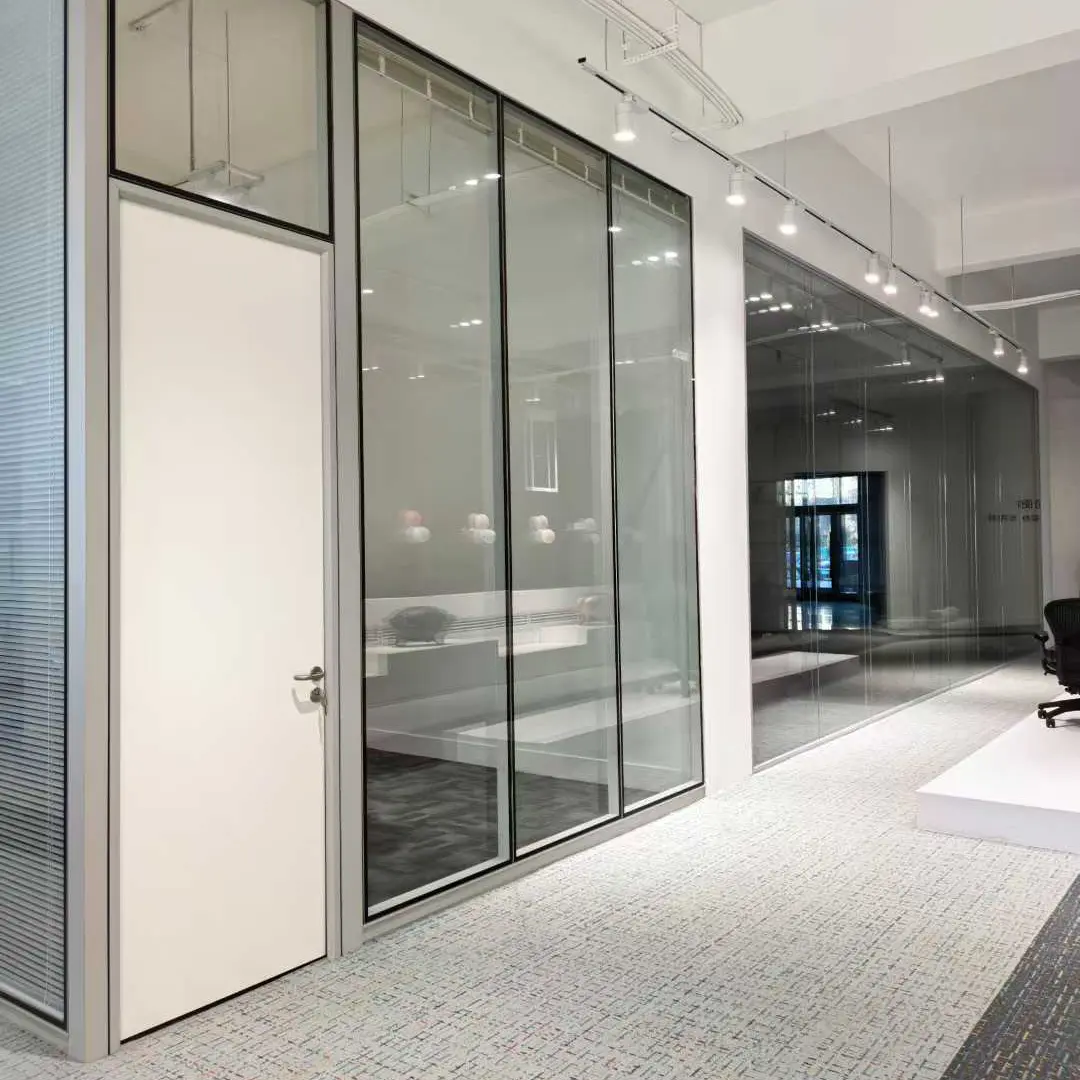
1. Decide Which Rooms Need a Steel Personnel Door
Our steel security door is positioned for “restricted-access offices, server rooms, finance vaults, executive suites, and security-sensitive zones.” That list is a good test. Every room on it holds something — equipment, money, documents, data — whose loss matters more than the inconvenience of an opaque door.
Rooms that justify steel
Server and comms rooms, cash handling and safe rooms, HR and legal records stores, controlled stock rooms, and executive suites where sensitive material is left on desks overnight. In each of these, the question is not who can hear inside, it is who can get inside.
Rooms that usually do not
Meeting rooms, private offices and interview rooms need confidentiality, not forced-entry resistance. A steel personnel door there removes daylight and passive supervision and adds nothing the room needs. A glazed door with a good acoustic seal is usually the better answer, as covered in our guide to partition door types.
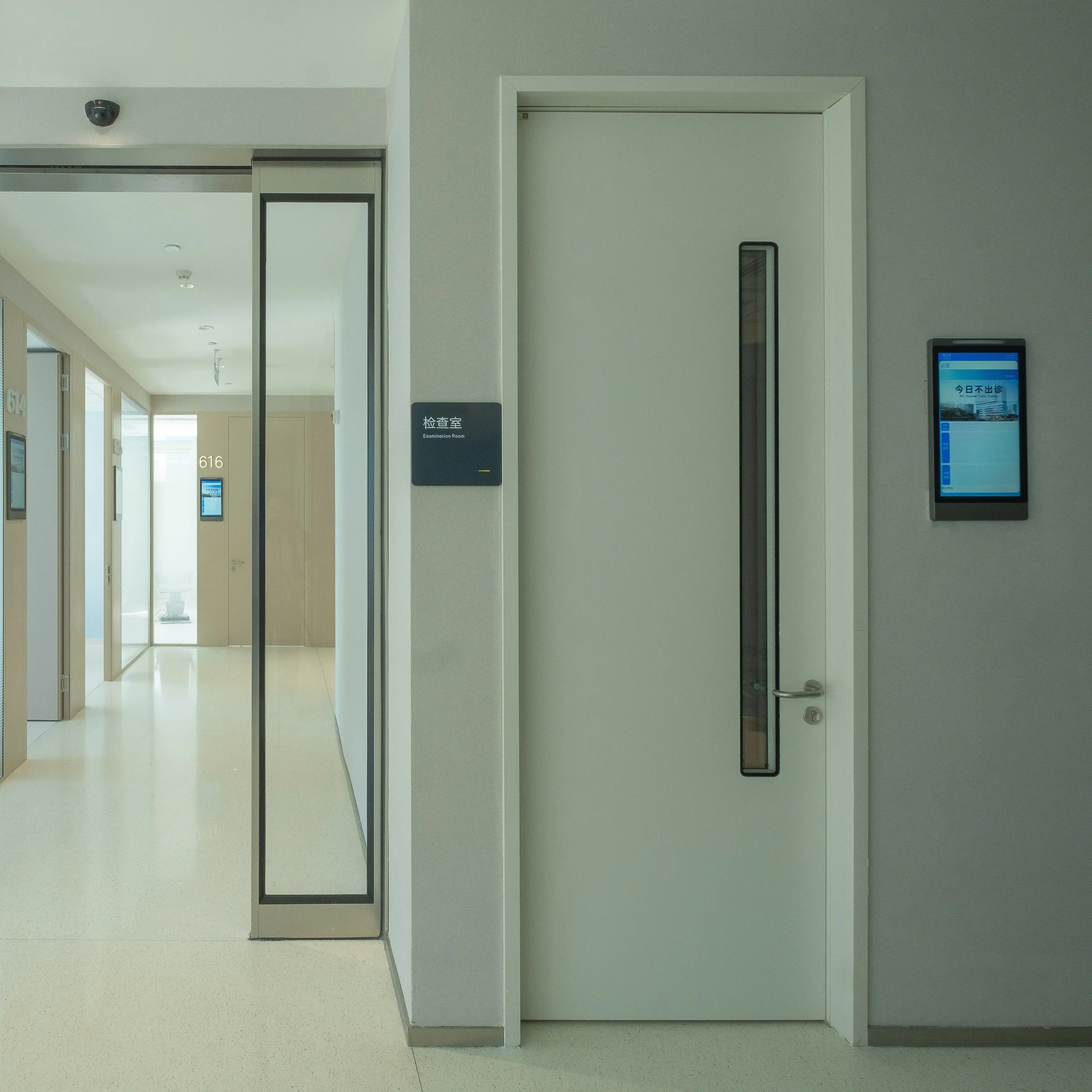
2. Specify the Steel by Level and Gauge
“Heavy duty” is not a specification. The common language for steel doors is the Steel Door Institute’s ANSI/SDI A250.8-2023, which sorts standard steel doors into four levels by duty and sets a minimum steel thickness for the door face and for the frame.
| SDI level | Duty | Door face (minimum) | Frame (minimum) |
|---|---|---|---|
| Level 1 | Standard duty | 0.032 in / 0.8 mm (20 gauge) | 0.042 in / 1.0 mm (18 gauge) |
| Level 2 | Heavy duty | 0.042 in / 1.0 mm (18 gauge) | 0.053 in / 1.3 mm (16 gauge) |
| Level 3 | Extra heavy duty | 0.053 in / 1.3 mm (16 gauge) | 0.053 in / 1.3 mm (16 gauge) |
| Level 4 | Maximum duty | 0.067 in / 1.6 mm (14 gauge) | 0.067 in / 1.6 mm (14 gauge) |
Level 1 doors come in 1-3/8 in and 1-3/4 in thickness; Levels 2 to 4 are 1-3/4 in. SDI notes that gauge numbers are for reference only, so the useful number is the thickness itself.
SDI is a US standard, and a project in the Gulf or elsewhere may be governed by a different one. It is still the clearest way to ask the question. Ask the supplier to state the face sheet and frame thickness of the steel personnel door in millimetres, then compare it with the table rather than with a sales description.
3. Choose the Access Control, and How It Fails
The steel security door in our range is built for biometric and RFID access control, and every door in the range is compatible with fingerprint, facial recognition and RFID readers. Choosing the reader is the easy part. The decision that matters is what the lock does when power is lost.
Fail-safe versus fail-secure
As door hardware consultant Lori Greene explains in Construction Specifier, “fail-safe products are unlocked when power is removed” and “fail-secure products are locked when power is removed.” The terms describe the secure side of the door, the side a person enters from.
She also notes that most products provide free egress either way, so people inside can still leave. On fire-rated doors, fail-secure strikes must be used under NFPA 80, while fail-safe locks are typically reserved for stairwell doors that must allow re-entry.
What that means for an office
For a server room or cash room, fail-secure is the usual choice: a power cut should not open the room. Whatever you choose, confirm the egress arrangement with the local authority, and decide it before manufacturing. The reader’s cable has to run through the frame, and adding it later means surface trunking or removing the leaf.
How the lock gets power
There are two common ways to electrify a steel personnel door. An electric strike sits in the frame, so the power stays in the wall and the leaf only carries a standard lockset. An electrified lock sits in the leaf itself, which means power has to cross the hinge side of the door through an electrified hinge or a protected door loop.
Either works. What matters is that the choice is made before the frame is manufactured, because it decides where the cable runs, where the power supply lives, and whether the frame needs a prepared hinge or strike pocket.
4. Decide the Fire Rating Before the Door Is Made
On our product page the fire rating is listed as optional, and the quote request asks for your fire rating requirement. That is deliberate: a fire-rated steel personnel door is not a standard door with a label added. The door, frame, hardware and label are tested and supplied as one assembly.
If the wall around the room is itself fire-rated, the door has to match it. Our guide to fire partition vs fire barrier explains how the wall rating is set, and our fire partition range covers the partition side.
Inspection does not end at handover
According to a Consulting-Specifying Engineer review of NFPA 80, fire door assemblies need annual inspection by a qualified person, and inspection reports must be kept for at least three years. Labels must stay clearly visible, and painted-over or missing labels are among the most common failures. Tell the painting contractor before the steel personnel door is finished on site.
5. Size, Finish and Fit With the Glass Partition Line
Standard door heights in our range are 2100 mm, 2400 mm and 3000 mm, with heights up to 3600 mm available, in widths of 800 to 1200 mm, and double-leaf configurations where the opening needs it. A steel personnel door rarely needs to be the tallest door on the floor; matching the head height of the adjacent doors keeps the elevation calm.
The finish is brushed stainless or painted RAL. Brushed stainless reads clearly as security equipment. Painted RAL lets the door disappear into a solid wall or match the partition framing.
Frame finishes across our door range are matched to the Great Wall and Everest partition series, so a steel personnel door can sit in a glass partition line without looking like a different contractor installed it.
6. Send a Complete Brief for the Quote
The quote request on our steel security door page asks for five things. Sending all five at once is the fastest way to an accurate price:
- Door dimensions, including whether the opening is single or double leaf
- Target access control system, with the reader type and the fail-safe or fail-secure decision for each room
- Fire rating requirement, or a clear statement that the opening is not rated
- Finish, either brushed stainless or the RAL colour
- Code references the project must meet
If the steel doors are part of a wider glass partition package, our office glass partition specification checklist covers the rest of the brief.
A Room-by-Room Worked Example
Here is how the six specs come together on a typical office floor with four controlled rooms, each behind a steel personnel door. Treat it as a pattern for your own schedule rather than a fixed answer: the steel level and the fire rating still have to be confirmed against the project’s codes and fire strategy.
| Room | What the door protects | Lock on power loss | Fire rating | Finish |
|---|---|---|---|---|
| Server or comms room | Equipment and data | Fail-secure | Only if the surrounding wall is rated | Painted RAL to match the wall |
| Cash room | Cash and safes | Fail-secure | Only if the surrounding wall is rated | Brushed stainless |
| HR and legal records | Personnel and legal files | Fail-secure | Check the fire strategy for stored paper | Painted RAL |
| Executive suite | Documents left overnight | Decided with the building’s security team | Usually not required | Matched to the partition framing |
Notice what is not on the list: meeting rooms, focus rooms and private offices. Those stay glazed. On most floors only a handful of openings need a steel personnel door, and keeping that number small is what keeps the rest of the office open and full of daylight.
The table also shows why the brief matters. Each row carries a different combination of lock behaviour, rating and finish, so a single line in the door schedule that says “steel door, access controlled” would have produced four identical doors for four different jobs.
Looking After the Door After Handover
A steel personnel door is built to last, but the parts that move still need attention. Closers, hinges, the strike and the reader are what wear first, usually because the door is used far more heavily than the schedule assumed.
Build three checks into the facilities plan. Check that the door closes and latches on its own from fully open, because a door that stays ajar is not secure. Check that the reader and lock still behave as specified when power is cut, which is easy to test during a planned shutdown. And for any rated opening, keep the annual NFPA 80 inspection and its report on file.
If the room’s use changes, revisit the steel personnel door specification. A store that becomes a server room, or a records room that is emptied, may now need a different steel level, a different fail mode or a fire rating the old use did not.
Five Specification Mistakes to Avoid
Most problems with a steel personnel door are decided on paper, long before installation. These are the five that come up most often when the door schedule is reviewed late.
1. Writing a duty description instead of a level
“Heavy-duty steel door” can mean almost anything. Without an SDI level, or a stated face and frame thickness, two suppliers can quote very different doors against the same line and both be compliant with the wording.
2. Choosing access control after the doors are made
The reader, the lock and the cable route are decided together. Once the frame is manufactured without a cable path, adding access control means visible trunking or a replacement frame.
3. Putting an unrated door in a rated wall
A fire-rated partition is only as good as its weakest opening. If the room sits behind a rated wall, the door, frame and hardware have to be supplied as a rated assembly with a label, not upgraded on site.
4. Painting over the label
Site painting is one of the most common ways a rated door fails inspection. Mark the label area on the drawings and tell the finishing contractor before work starts.
5. Defaulting every lock to one fail mode
A single fail mode across the building is simpler to write but rarely right. A cash room and a stairwell re-entry door need opposite behaviour when power is lost, so decide fail-safe or fail-secure room by room.
Steel Personnel Door vs Glazed Partition Door
| Question | Steel personnel door | Glazed partition door |
|---|---|---|
| What it protects | The room’s contents | The room’s privacy and daylight |
| Visibility into the room | None | Full, or switchable with privacy glass |
| Forced-entry resistance | Steel leaf, specified by level and gauge | Limited by the glass |
| Access control | Biometric and RFID | Fingerprint, facial recognition and RFID compatible |
| Typical rooms | Server, cash, records, restricted offices | Meeting rooms, private offices, focus rooms |
Most floors need both. The glazed doors keep the office open; the steel personnel door goes on the two or three openings where security is the brief.
Frequently Asked Questions
What gauge should a steel personnel door be for an office?
SDI’s selection guide, SDI 108, matches the four levels to building uses according to how often the door is used and how much abuse it may take. Decide the level for each steel personnel door on that basis, then ask the supplier for the actual face and frame thickness and check it against the table above.
Does a steel personnel door have to be fire rated?
Only if the opening requires it. On our range the fire rating is optional, which is why the quote asks for your requirement. If the surrounding wall is fire-rated, the door must be supplied and labelled as a rated assembly, and it then needs annual inspection under NFPA 80.
Should the lock be fail-safe or fail-secure?
For server rooms and cash rooms, fail-secure is usual, so a power cut does not open the room. Most hardware still allows free egress from inside either way. Fire-rated doors use fail-secure strikes. Confirm the arrangement with the local authority before the doors are made.
Can a steel personnel door match a glass partition system?
Yes. Frame finishes across our door range are matched to the Great Wall and Everest partition series, and the steel leaf itself can be brushed stainless or painted in a RAL colour, so the door can sit in a glazed wall line as part of the same system.
Is a steel personnel door the same as a steel security door?
In practice, yes. Steel personnel door is the specification term for a swinging steel door used by people; in an office it is usually described as a steel security door, as on our product page. What actually makes the door secure is its specification: steel level, frame, lock, access control and fail mode.
Can a steel personnel door be added to an existing glass partition?
Usually, provided the partition line has a door module or a solid section that can take the frame. Frame finishes across our door range are matched to the Great Wall and Everest series, so the new door can match the existing framing. Plan the access control cable route at the same time, because it runs through the frame.
What sizes are available?
Standard heights are 2100, 2400 and 3000 mm, with heights up to 3600 mm, in widths from 800 to 1200 mm. Double-leaf doors are available for wider openings such as equipment rooms that need to take racks or trolleys.
Get Your Steel Personnel Door Schedule Specified
Planning the controlled rooms on a real floor plan? Send us the layout with the rooms you want secured, and we will work through each steel personnel door: steel level, access control and fail mode, fire requirement, size and finish. You can also see the full office door range.